




2024-05-09
Greenhouse gas emissions from transport are falling too slowly
- Although national strategy documents call for increasing the use of renewable energy sources and energy efficiency in the transport sector, there has been little improvement or the situation is only getting worse.
- The potential of domestic biofuel production is not being exploited and the development of electricity use in the transport sector is too slow.
- In order to achieve the national targets, greenhouse gas emissions in the transport sector must be reduced by at least 39% by 2030 compared to 2022.
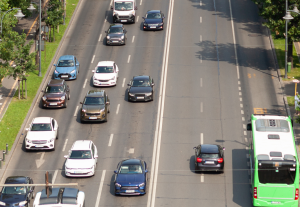
The transport sector is the largest energy consumer in Lithuania, with around 64 TWh of final energy consumption in 2022, of which 25.7 TWh, or 40.4%, are in the transport sector. The sector accounts for 31.8% of Lithuania's total greenhouse gas emissions.
The target is to reduce greenhouse gas emissions by at least 14% compared to 2005. Lithuania is committed to achieving a share of at least 15% renewable energy in transport by 2030. To achieve these targets, EUR 1.58 billion is foreseen for the period 2021-2027. The results of the audit "Implementation of the Energy Independence Targets in the Transport Sector" show that there is little improvement or, on the contrary, situation is only getting worse.
One of the main measures to reduce greenhouse gas emissions in the transport sector is to encourage the switch to renewable energy sources such as electricity and biofuels. The share of energy from renewable sources in transport consumption was planned to be at least 10% in 2020, but in 2022 it was still only 6.7% - 6.5% from biofuels and only 0.2% from electricity.
Although the share of advanced biofuels blended into the fuel sold is set to increase annually from 2022 onwards, such biofuels are not produced in Lithuania, but imported from other countries, which does not ensure the use of local raw materials in the production of advanced biofuels in Lithuania.
"The development of renewable energy sources in the transport sector is essential to mitigate the impact of climate change, but the potential of local biofuel production is still not being exploited, and the development of electricity use in the transport sector is proceeding too slowly," says Auditor General Mindaugas Macijauskas.
The number of electric vehicles and charging points is growing steadily, but the targets for 2023 have not been met: there were nearly 20,000 electric vehicles in the country last year instead of the planned 25,000, and 2,500 charging points instead of the planned network of nearly 9,000. The number of petroleum-fuelled vehicles has grown much faster, doubling since 2005 to 2 million by 2023.
More efficient use of energy by increasing the number of journeys made by public transport would also contribute to achieving the targets. Passenger transport by road and rail is below its pre-pandemic level (380.8 million). The target for 2025 (405 million passengers) is unlikely to be reached. In order to increase the use of public transport by the population, it is essential to ensure that public transport is attractive and convenient for the population.
The implementation of the recommendations made by the National Audit Office will accelerate the use of renewable energy sources and reduce the use of petroleum fuels in the transport sector. This would strengthen Lithuania's energy independence and reduce greenhouse gas emissions.