


2021-09-15
The existing arrangements do not ensure that the elderly with care and social services needs live independently at home for as long as possible
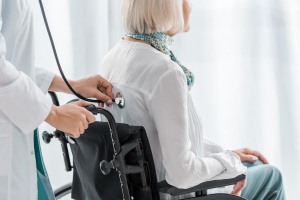 According to the Department of Statistics, at the beginning of 2020, almost 20% of the country’s population (555.9 thousand people) was aged 65 and over. By 2050, 31.5% of Lithuania’s population is expected to be elderly. To assess these trends, the National Audit Office carried out an assessment of the care and social services provided to the elderly in 2017–2019. The assessment analysed whether the accessibility of these services for the elderly is sufficient and whether the conditions for access to services are of an equal quality.
During the assessment period, on average, 15% of the elderly each year received care and social services in inpatient care institutions and at home. On average, around EUR 213 million is spent each year on these services and targeted compensations.
When people are unable to live a full life due to reduced capacity for self-care and health problems, they often need integrated care and social services to improve their quality of life and that of their relatives. Currently, integrated services at home are provided to individuals as part of the integrated support project, funded by the European Union, which will end in 2027. The National Audit Office notes that, at the end of a fixed-term project, failure to provide access to the necessary integrated care and social services will restrict the possibilities for the elderly to live independently and fully at home for as long as possible. “Although the integrity of care and social services has been discussed in the country’s strategic documents for a couple of decades, the sustainable provision of integrated care and social services has not yet been ensured,” says Giedrė Piktelytė, Audit Team Leader.
One of the more pressing problems faced by the elderly waiting for services is the queues in municipalities and hospitals. The National Audit Office notes that waiting queues in hospitals are caused by the absence of a centralised data system for queues management and the seasonality of the demand for services, which increases during the cold season.
Institutions providing services are also facing challenges, with a shortage of social workers, nurses and their assistants. The personnel of the hospitals have to serve 3 times more people than recommended. Due to the personnel shortages in hospitals and institutions providing care services, there are no conditions ensured for providing quality nursing and care services.
It should be noted that the Government has drafted the Economic Recovery and Resilience Facility “New Generation Lithuania”, which foresees a reform of the provision of long-term care services for the period 2021–2026. It aims to improve access to integrated social and health care services for the population by designing and implementing a sustainable model for the provision of long-term care services. Successful implementation of this reform and the necessary legislative changes would improve access to integrated care and social services for the elderly and meet their individual needs.
The assessment carried out by the National Audit Office is not an audit and no recommendations are made on the basis of its findings.