


2020-11-19
National Audit Office of Lithuania: Not all residents have the possibility to obtain clean drinking water, not fully treated waste-water is also released into the environment
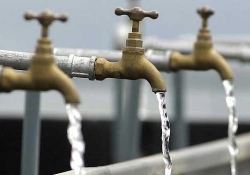
The audit “Water Supply and Waste-Water Management” conducted by the National Audit Office of Lithuania (NAOL) has revealed that not all residents have the possibility to obtain drinking water corresponding to safety and quality requirements, while the released waste-water is not always appropriately treated, and the infrastructure of centralised drinking water and waste-water treatment is not sufficiently developed.
“In 2014–2018, the water suppliers provided drinking water for 327.1 thousand residents without carrying out all research concerning the indicators established in the hygiene regulations. Each year 17 thousand residents have been supplied with centralised drinking water with exceeded limit values of toxic (chemical) indicators. The audit results also reveal that unlicensed suppliers of drinking water that are not able to ensure continuous drinking water supply and suitable quality provide drinking water to more than 2.5 thousand residents,” says Arvydas Laurinkevičius, the Principal Auditor of the Economy Audit Department of the NAOL.
16.9% of the population obtain drinking water individually; however, the water in dug wells also does not always correspond to the safety and quality requirements. In 2014–2018, the results of an assessment of more than 10 thousand drinking water samples from dug wells conducted by the State Food and Veterinary Service together with the National Public Health Center revealed that approximately 29.8% of samples did not correspond to the requirements on water quality.
In 2004–2018, approximately EUR 1.4 billion from the State budget and European Union (EU) funds were invested in the sector of water management; despite this, in 2019, fewer people used services of the centralised waste-water treatment than had access to the internet – 76.5% and 83%, respectively. This is due to insufficient development of the infrastructure of drinking water and waste-water treatment as well as since fewer than planned residents connect to the built networks.
In 2014–2019, approximately 39.8 million m3 (24.2%) of not treated or insufficiently treated domestic waste-water and 7.7 million m3 (13%) of surface waste-water were released each year into the natural environment. In 2014–2019, having conducted investigations on approximately 8.5 thousand residents and economic operators, the Environmental Protection Department identified 1,971 cases when residents and 443 cases when economic operators treat their waste-water inappropriately . In most cases, the waste-water is not treated according to the established requirements due to unsuitable and outdated treatment installations or installations with insufficient capacity.
By implementing the recommendations of this audit and rationally managing funds allocated for this sector, more residents will be able to use the centralised drinking water supply and waste-water treatment services, and more attention will be focused on the drinking water quality and waste-water treatment.