


2019-07-30
Extreme poverty rates are improving, but not as a result of social support
 Income inequality and poverty in Lithuania remain among the highest in the European Union (EU): in 2018, 22.9 % of the population lived below the at-risk-of-poverty threshold, 11.1 % - below the extreme poverty threshold. The Organisation for Economic Cooperation and Development (OECD) and the European Commission note that the adequacy of social benefits in Lithuania remains relatively low, the living standards of the poorest households have improved only moderately and the impact on reducing income inequality is lower than in the EU.
Studies have shown that owing to the poverty, the society incur considerable economic, health and social costs: the poor are unable to fully participate in the life of society, and their children have a lower chance of learning and realising themselves. The social support system plays an important role in ensuring the necessary or at least the minimum needed protection to the poor.
The National Audit Office — the Supreme Audit Institution --has carried out an audit entitled “Does Social Support Ensure the Minimum Consumption Needs of People Living in Poverty and Promote Labour Market Integration”.
When comparing the figures for 2017 and 2018, the number of people living in extreme poverty decreased by 78 thousand people – up to 312 thousand people, however social benefits did not have an impact on this (both in 2017 and 2018 social benefits reduced the poverty by only 5.7 percentage points).
The audit results showed that 86 % of the support received by the selected for evaluation recipients of social benefits, including the value of benefits and social services provided by the municipality, did not ensure the minimum consumption rate of EUR 245 per month in 2018.
“We have established that the provision of support is not based on the assessment whether the whole set of the measures, including services, benefits and advantages, will ensure a minimum level of consumption needs. The individual needs of the population are not clarified and, as a result, measures to encourage or motivate people to get involved in the labour market or society become complex,” says the Principal Auditor of the Public Welfare Audit Department Aušrinė Asanavičienė.
Municipalities which are responsible for the provision of social support do not make use of about half of their budgets for the monetary social benefits provided by the Law, although the need for other social support measures remains unsatisfied. Moreover, municipalities have tended to raise expenditure on education, the economy, health, recreation and culture.
Relevant developments have taken place in the course of the audit. The Ministry of Social Security and Labour which is responsible for policy shaping in the area of social support is implementing projects aimed at provision of services promoting employment and motivation, and the development of the measure for analysis and forecasting allowing to monitor and evaluate the effectiveness and impact of social support at the national and municipality level. However, in order the social support to ensure the minimum and individual needs and promote integration into the labour market, the auditors recommended to create a model for complex provision of social support.
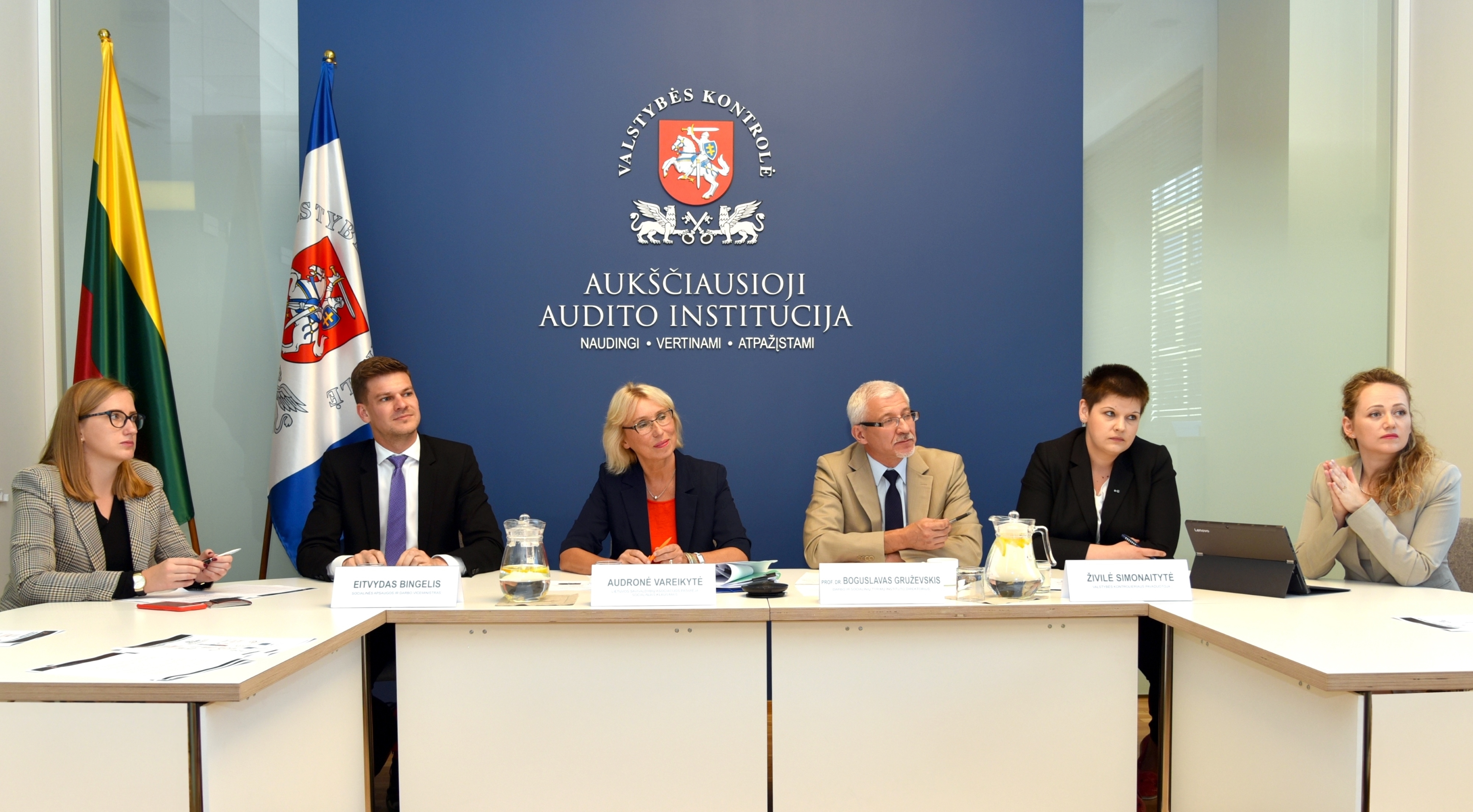
In a discussion held on Tuesday, the Supreme Audit Institution together with the Ministry of Social Security and Labour, the Lithuanian Association of Municipalities and experts discussed the effectiveness of social benefits and their impact on income inequality.
The importance of the support system for reducing income inequality and poverty will be discussed with Lithuanian and foreign experts at the third Sustainable Development Conference “Signals 2019” to be held in the autumn of this year.