




2018-12-12
The public railway infrastructure should be managed more effectively
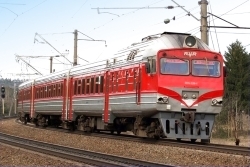
An effective public railway infrastructure is necessary for the assurance of the smooth and safe mobility of passengers and freight. Railway infrastructure refers to state property used for the transportation of passengers and freight by rail. Responsibility for due management and functioning of said infrastructure, as well as for the regulation of railway traffic and market is borne by, respectively, the Ministry of Transport and Communications, JSC Lithuanian Railways, the Lithuanian Transport Safety Administration, and the Communications Regulatory Authority.
The audit “The Management of the Public Railway Infrastructure” conducted by the Supreme Audit Institution has revealed delays in the major overhaul works of the public railway infrastructure. The need for said major overhauls had increased by 55 percent over the past 10 years, constituting 702 km (or 30 percent of all railway tracks) at the end of 2017. According to the company, maintaining the condition of the tracks was carried out by performing routine maintenance, thereby ensuring sufficient throughput and the safety of traffic.
“In order to ensure safe and continuous train traffic, the speed of passenger trains was reduced on 75 percent of all railway tracks, while the speed of freight trains was reduced on 18 percent of all tracks,” said Julius Lukošius, Director of the Economy Audit Department. “Furthermore, such condition of railway sections also leads to other negative consequences, such as reduced quality of transportation and increased costs of the maintenance of railway tracks”. Having analysed the costs of maintaining railway tracks which require major overhauls, JSC Lithuanian Railways has determined that performing maintenance on 1 km of such tracks costs approximately and additional 30,800 Eur each year.
The audit has identified a number of shortcomings in the use of the capacities of the public railway infrastructure. The Passenger and Freight Transportation Directorates of JSC Lithuanian Railways receive preferential treatment in terms of the opportunities for using the public railway infrastructure, because, unlike other carriers, said Directorates do not pay any mandatory advance for the rights to use the aforementioned infrastructure. Furthermore, due to the specifics of the organisation and implementation of railway transportation, carriers fails to implement 39 percent of planned trips each month on average. For this reason, the manager of the public railway infrastructure fails to receive a part of all potential income.
According to the auditors, the property of the manager of the public railway infrastructure must generate more income. For instance, the Railway Infrastructure Directorate, responsible for the effective use of said property, provides 22 percent of the overall area of premises under its management to other divisions of the company at the price of actual costs incurred by using said property, rather than at market prices.
It should be noted that the Ministry of Transport and Communications, acting as the trustee of the public railway infrastructure, has failed to develop a consistent and continuously operational system designed for the supervision of the activities performed by the manager of the public railway infrastructure, which would allow for the determination of the validity of the need for public funds allocated for the management of said infrastructure.
For the purposes of the audit, National Audit Office assessed factual data of 2007-2014 and prospective data of 2018-2027. Another thing of importance is the changes which took place during the audit. During the autumn session of the present year, the Seimas commenced its consideration of a draft law amending the Railway Transport Code, whereby Lithuanian Railways would be reorganised by separating activities related to the transportation of freight and passengers, and the public railway infrastructure, and founding a number of individual companies. We are hoping these activities will have a positive impact on assuring the independence of the manager of said infrastructure. After performing the audit, the National Audit Office furnished the Ministry of Transport and Communications with recommendations. Measures and deadlines for the implementation of the recommendations shall be provided in the section “The Recommendation Implementation Plan” of the report.