



2018-01-24
State Real Estate Management Fails to Generate Appropriate Value
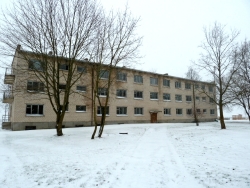
Currently, the state has 28 100 real estate (henceforth – RE) objects and 726 real estate managers. The maintenance of said real estate costs no less than 180 million Eur every year. The RE management policy of the state is typically inert and manages to provide planning for the management of only 20 percent of the owned real estate (mostly unused or intended for administrative purposes). No decision has yet been taken regarding the management of the remaining real estate intended for residential, educational, medical and other purposes. State management of RE is barely tied to effectiveness, and alternative solutions remain unconsidered. Such are the conclusions of the audit, “The Management of State Real Estate” conducted by the National Audit Office.
“The audit has indicated a lack of long-term guidelines for the management of state-owned real estate in terms of the type and amount of real estate necessary for implementing specific functions, and the amount of real estate which could be expediently leased, or developed/sold in the future. Almost half of the objects are engineering structures (9 200 units) and low-value buildings (4 500 units); more than 670 objects are not in use; and only a small part of the 2 300 flats, other residential objects, recreational houses, etc. have been recognised as necessary for the implementation of specific functions,” said Director of Governance Audit Department Živilė Simonaitytė.
State and municipal assets can be transferred on the basis of commodate to public establishments, associations, etc. in accordance with set procedure. Approximately 16 percent of state-owned RE has been transferred on said basis. The auditors found the expediency of some decisions to be rather dubious – in some cases, assets have been transferred to subjects who earn or receive income necessary for their operations, thereby affecting competitiveness. Out of the 63 assessed public establishments, associations, etc., which manage premises on the basis of commodate, 30 (48 percent) provide a variety of services for pay. The auditors had identified a number of cases where public establishments made use of the faulty procedures (by obtaining only a symbolic right to manage a public establishment) to become joint owners of public establishments and transfer overpriced real estate to them free of pay.
The auditors had also noted that some municipalities, when requesting the ownership of state RE, fail to determine if it’s really necessary for their operation. For instance, 32 municipalities had failed to use 25 percent of the state RE transferred to them between 2012 and 2016. After several years, a third of said RE was either sold or included in various lists of municipal assets put up for sale.
The National Audit Office had recommended the Government to develop guidelines for the management of state RE — specify the type and amount of real estate necessary for the long-term implementation of specific functions, and how much RE can be leased, or developed/sold in the future to obtain maximum benefit; consider terminating the transfer of state real estate on the basis of commodate; and severely limit the opportunities for transferring state-owned buildings to municipalities.