




2017-11-29
Could Lithuanian Students Perform Better?
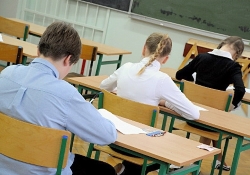
Having conducted an audit called, “Could Lithuanian Students Perform Better?”, the National Audit Office claims that general education in Lithuania does not function as the key to a better life for all students. In order to assess whether the quality of general education is being ensured, the audit was focused on the changes in the performance of students, because that is the only indicator which tracks the progress in teaching Lithuanian students across the country. The audit found the goal of improving student performance to remain a merely nominal indicator in the key strategic document of the country.
Although since 2006, expenditure for education has grown by as much as 53 percent, reaching almost half a billion Euros by 2016, learning outcomes did not improve. According to an assessment conducted by the OECD, Lithuania remains below average in terms of student performance.
“The audit has shown that despite reforms aimed at the school network, learning outcomes have not improved. As the number of students keep plummeting due to changes in the demographic composition of the country, instead of being formed, classes are often joined together. The large student network forces teachers to work in several schools in half-empty classrooms without any motivation to strive for better student performance,” said Deputy Director of the Public Wellbeing Audit Department Lina Balėnaitė.
Auditors have noted that learning outcomes in many smaller schools are below the average not only in the EU, but also in Lithuania. In cases where student performance exceeds the average of the OECD countries, the growth of the GDP of that country covers the expenditure for education in 10 years. It has also been noted that poorly performing students are a potential burden on the public, because many of them fail to live and work on their own in the future, necessitating social services.
The auditors have determined that 34 percent of parents with school-aged children pay for tutoring services. A quarter of them had to hire tutors when their children were still in elementary school. 28 percent of parents had said the reason they use tutoring services is due to poor teaching of the relevant subjects at school. 24 percent of parents admitted they’d like to hire a tutor, but lack the money to do so. The wide-spread reliance on tutoring services indicates that some of the educational needs of children are being neglected.
The management of schools is another important aspect which has an impact on learning outcomes. The audit has shown that Lithuanian schools with effective leaders often succeed in building well-functioning communities which involve parents, and lead to progressive changes. The auditors recommend the Ministry of Education and Science to develop and establish a system for providing school leaders with support and opportunities for professional development.
The audit report states that the reform aimed at schools of general education is not concerned with improving learning outcomes, and the Ministry of Education and Science lacks influence in the reform of the network of municipal schools.
Some schools and municipalities fail to specify the goal of improving student performance in their strategic plans. The auditors have noted a lack of engagement with setting goals oriented towards specific outcomes.
Audit recommendations state that in order for the reform of the municipal school network to ensure better student performance, as well as economically feasible and effective maintenance of related infrastructure, it must specify clear goals, tasks, and criteria, designed to ensure higher quality education. The Ministry of Education and Science was also encouraged to approve indicators of educational progress to track student performance and the quality of education. This would ensure the purposeful implementation of national priorities in education, and evidence-based decision-making.