


2017-11-07
Auditors: Residents pay Extra for Inappropriate Waste Management
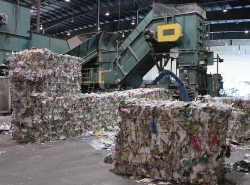
In order to ensure the management of product and packaging waste (tires, accumulators, batteries, etc.), as well as enforce an environmental pollution tax applicable in cases of inappropriate waste management, the Ministry of Environment must develop an information system designed to account for products, packaging and waste, ensure its continuous operation, initiate appropriate changes to the legislation, and increase the effectiveness of public environmental protection measures. These and other measures had been submitted to the National Audit Office by the Ministry of Environment in its plan regarding the implementation of recommendations, provided after the audit entitled, “Applying the Principle of Responsibility of the Manufacturer”. Upon conducting the audit, the National Audit Office had submitted its data to the SIS for further assessment.
“Key changes in the management of product and packaging waste are necessary to ensure appropriate processing, and eliminate the need for residents to pay extra for it,” said Deputy Director of the Economic Audit Department Mindaugas Milčiūnas.
As evidenced by the audit, one of the key drivers behind the current situation is the failure of manufacturers and importers to perform their duties in processing product and packaging waste, as well as to pay an environmental pollution tax in cases where such failure occurs. Over 15,000 manufacturers and importers who provided the internal market with 1.4 million t in products and packaging in 2013-2015 were registered in late 2016, although such data is incorrect, because regional environmental protection departments had determined that manufacturers and importers inspected in 2014-2016 had failed to declare 3.2 million t in products and packaging. Furthermore, institutions operating under the Ministry of Environment, tasked with monitoring and controlling such processes, fail to carry out their duties in an appropriate manner.
The auditors has noted that waste managers provide incorrect data on the quantities of processed waste, and fail to address identified shortcomings in a timely manner, which makes public information about processed waste in Lithuania unreliable. In 2013-2016, waste managers had processed 23,400 t of waste while failing to comply with set requirements, which had deprived the state budget of 36.2 million EUR in environmental pollution taxes. Nearly all decisions had been challenged before the court, while taxes for inappropriately processed waste remain unpaid to this day.
Manufacturers and importers are obligated fund the processing of product and packaging waste, but not all residents have recycling bins near their home, and some of them fail to recycle in the first place. This is one of the reasons why up to 28 percent of mixed waste is composed of packaging waste, and why residents are forced to pay for its processing.
Although residents had been given the opportunity to bring electric and electronic equipment, and tire waste to large-scale waste collection facilities free of charge, since manufacturers and importers fail to allocate funds to the operation of such facilities, the processing of said waste also rests on the shoulders of residents.
In order to achieve effective processing of product and packaging waste, it is necessary to ensure the efficiency of public environmental protection measures. The auditors had determined that the Ministry of Environment had failed to ensure the coordination of regional environmental protection departments. There is, to this day, a lack of a consistent and continuously operational control monitoring mechanism, and a transparent system for selecting manufacturers and importers, included in annual inspection plans; while regional environmental protection departments fail to coordinate their actions regarding the planning and implementation of waste management inspections, and carry out said activities at their own discretion.