


2017-02-24
Prevention of suicide in Lithuania: no strategy nor implementing body
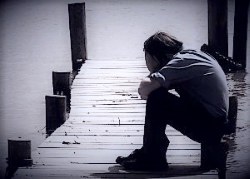
In recent years, the suicide rate in Lithuania has been decreasing very slowly, furthermore, there is a shortage of well-organised assistance for those in need. Such facts were revealed by an audit on suicide prevention and assistance to persons at risk of suicide.
The mortality rate (standardised) due to suicide was 30.41 per 100 000 population in 2015 in Lithuania. Within the following three years, the Health Strategy of Lithuania aims at lowering this number by 36 per cent, to 19.5 cases, while in 2025 – even by up to 60.5 per cent, to 12 cases. However, in recent years – from 2012 to 2015 the degree of success in reducing the mortality rate reached a mere 1.6 per cent. The audit conducted by the National Audit Office of Lithuania shows that there is a lack of solutions and measures that may change the situation.
“In order to achieve such ambitious objectives and help reduce the number of suicides, focused efforts of all sectors – health, education, social care and labour, internal affairs, non-governmental organizations as well as targeted actions and the involvement of the Government are required. The audit shows that there is still a lack of systematic approach and coordinated efforts of authorities in planning, implementing suicide prevention measures and providing assistance to the persons at risk”, says Director of Audit Department 1 Laimonas Čiakas.
Public auditors point out that there is no suicide prevention strategy and no institution of appropriate level for nationwide coordination of suicide prevention in Lithuania. The algorithm (scheme) for provision of assistance to persons at risk of suicide has not been approved. It means that some persons in need of assistance remain unidentified, while institutions that provide assistance may not react in a timely manner and provide assistance throughout national territory. The audit disclosed that there is no monitoring and assistance system ensuring a continuous assistance after an attempted suicide in Lithuania. Furthermore, not all the persons who may be the first ones to face those who plan or attempt a suicide, i.e., health care professionals, educators, police officers, firefighters-rescuers are trained to identify the risk of suicide and to offer assistance.
It is noted that persons at risk of suicide are not guaranteed access to the required services in mental health centres. In most of them, professionals work not every working day or not full time. In almost half of these centres, waiting time for the professional consultation is at least 3 days. Access to psychologist’s assistance for pupils is not consistent; the need for psychological assistance for staff of some institutions has not been identified.
National Audit Office of Lithuania issued recommendations to the Ministry of Health and Ministry of Education and Science calling on them to take concrete actions to ensure prevention of suicide, improve the accessibility and quality of the provided assistance as well as guarantee psychological support to pupils. One of the key recommendations is to assign an authority responsible for the coordination of the implementation of all these measures in Lithuania.