


2016-11-18
Line-up of Forensic Examinations: an Obstacle in the Administration of Justice
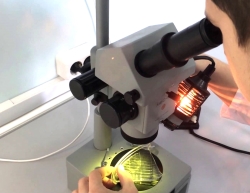
To determine the facts of criminal offences, judges and officers carrying out pre-trial investigation often need assistance from experts who use their knowledge to perform expert examinations and confirm or deny certain circumstances relevant to the case. The audit completed by the National Audit Office assessing organisation of expert examinations revealed that experts sometimes fail to present examination results in a timely manner, which leads to lengthy process of the administration of justice.
One of the goals of the Government Programme for 2012–2016 was shortening deadlines for the presentation of expert conclusions; however, there are no organised data on the types of expert examinations for which the deadlines have been shortened or the amount of time by which such deadlines have been cut. The audit results revealed that it takes about a year to receive conclusions of some expert examinations (economic, information technology), which exceeds the established pre-trial investigation deadlines. Representatives of police headquarters of three (out of 10 interviewed) counties stated that about 10 to 30 percent of pre-trial investigations remain unclosed due to lengthy expert examination deadlines. According to others, such investigations accounted for 10 percent. About 80 thousand pre-trial investigations are initiated in Lithuania every year, so the number of those falling behind the schedule is rather significant.
The audit results show that the measures taken to reduce the line-up of expert examinations are insufficient. In Lithuania, expert examinations can be performed by both private experts and those employed by public forensic examination bodies; however, there is no vision as to how the field of forensic examination should be developed in the future. There is no clear regulation regarding types of examinations and instances, in which such examinations should be performed by forensic examination bodies, and cases, in which they can be performed by private forensic experts. The auditors believe that in some cases assistance from private forensic experts could help to reduce the line-up. Currently, however, their involvement is inadequate: despite long lines, priority is given to examinations in forensic examination bodies and the payment procedures fail to promote cooperation with private forensic experts.
Lack of coordination of activities of forensic examination bodies is also observed. There is a lack of cooperation between the persons ordering and those performing the examinations. Public forensic examination bodies alone complete about 62 thousand expert examinations each year; however, there is no information as to whether all of the examinations were actually useful to the administration of justice in specific cases.
The auditors believe that certain strategic decisions and proper coordination as well as cooperation in the field of expert examinations would offer an opportunity to shorten the deadlines for the presentation of expert conclusions and ensure the quality of expert examinations, which would help to reduce the duration of pre-trial investigations and pre-trial processes. To receive the maximum benefit from the results of expert examinations and ensure their timeliness and quality, the auditors presented recommendations to the Ministry of Justice responsible for the shaping and implementation of public policy in the field of forensic examination.