


2016-10-27
Public Auditors: Promotion of Scientific Progress Lacks Targeted Action
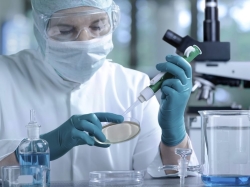
Funding for scientific research and experimental development (SR&ED) has been increasing over the past decade; however, in terms of SR&ED and innovation indicators, Lithuania is significantly behind other countries of the European Union. Analysis of programmes developed for the promotion of scientific and educational institutions revealed that there are no clearly defined priority directions for SR&ED projects funded by national budget funds and the impact of such projects is not assessed. Failure to make full use of opportunities to direct these projects towards the handling of key state issues has already been noticed.
The auditors analysed implementation of the Development of Studies and Science Programme implemented by the Ministry of Education and Science (MES) and the Development of the State Science and Studies System Programme implemented by the Research Council of Lithuania (RCL). In 2015, about 40 million euros were allocated for the implementation of these programmes. The audits revealed substantial problems of the entire system: SR&ED is not qualitatively focused on the handling of key state problems and benefits of state investment; failure to effectively attract additional funding from the business sector and international programmes is observed. There is a lack of coordination of the science monitoring system and greater initiative from the RCL in giving advice to the Seimas and the Government on the science policy-related matters.
The audits also revealed that in the Research Council of Lithuania, SR&ED topics are usually raised by scientific and educational institutions; being experts in the field, their scientists select the topics and assess projects, and ultimately participate in the implementation of such projects. When initiating urgent scientific research addressing state problems, the RCL and the MES fail to consider opinions of the Government, which is able to assess the relevance and importance of the problems. Therefore, one could doubt whether investment in SR&ED provided the greatest possible benefit to the public and addressed strategically most relevant state problems.
According to the auditors, there is a lack of measures, which would promote establishment of science-intensive businesses and encourage businesses to invest. Difficulties in attracting additional funds from international programmes were also noticed. Lithuania is next-to-last in the EU in terms of the amount of appropriations received under the Horizon 2020 Programme. Such a low position is due to the fact that the measures implemented merely encourage institutions to participate in the programme rather than help to achieve the best results and obtain funding. The Ministry of Economy is also responsible for the improvement of the country's indicators, since innovation is driven by both scientific institutions and business achievements.
Representatives of the auditees emphasized that one of the main issues in the SR&ED system is insufficient remuneration; therefore, implementation of projects contributes to its increase. The auditors believe that sensitive remuneration-related issues should be dealt with in other ways rather than through the aforesaid programmes aimed at encouraging scientific and educational institutions as well as contributing to scientific progress.