




2015-07-09
National Audit Office: only three municipalities provide all kinds of social services to older people
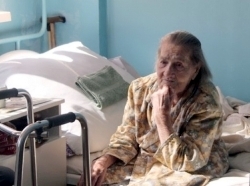 The number of older people in Lithuania is rising (in 1990 pensioners represented 19 % of the total population, in 2014 - 22,4 %), the need for social services is increasing, however the supply of services remains poor and hardly accessible.
The audit performed by the National Audit Office detected that the existing infrastructure of social services neither meets the needs of older people nor complies with the declared aspirations of the state to act responsibly in taking care of the elderly.
Only three (out of 60) municipalities – Vilnius City, Vilnius Region and Anykščiai Region – provide all kinds of social services for the elderly.
The Strategy approved by the Government a decade ago and the Law on Social Services adopted by the Seimas define that social services should be provided to the elderly by creating conditions for them to live as long as possible at their own home rather than at residential institutions. Regrettably, municipalities are not able to always propose such a possibility therefore older people are forced to wait in queues in order to get to residential inpatient institutions. In 2014, 47 % elderly in need of long term care were included into the waiting lists with average waiting time of 6 months (from 4 days to 1,5 year). Moreover, in all the cases examined by the auditors relating to long term care to the elderly in residential institutions possibility of alternative care in patients homes was not proposed. The auditors also detected that elderly people lack information about social services and that it is provided by means that are hardly accessible to them.
“In the Lithuania‘s Progress Strategy „Lithuania 2030“ we are striving to look up to the models of Scandinavian countries, however we still follow the systems of the last century. In Denmark social workers preventively visit twice a year all persons aged 75 or over to evaluate their needs, whereas in Lithuania two thirds of municipalities do not know how many elderly people reside in their territories. In the Strategy we declare that children should grow in families and elderly people should be taken care of at homes, however our actions lag behind – priority is given to provision of care services in residential institutions, we adapt people’s social needs to the infrastructure characteristic of the Soviet time rather than updating the system,” said the Auditor General Arūnas Dulkys when summarising the audit results.
Funding for social services has continuously increased – it has grown by more than one fourth from 2012, reaching 82 million EUR in 2014. In order to provide social services for the elderly more effectively municipalities should redistribute own and allocated state resources according to the priority established in the Law – to provide as many as possible social services at home rather than investing in expensive and little attractive institutional care.