



2015-03-26
National Audit Office: assets of state parks and reserves are managed inefficiently
 The National Audit Office conducted an audit to assess whether the administrations of state parks and reserves efficiently use their buildings, structures, land, and equipment allocated for the maintenance of state parks and reserves. “To be able to ensure the efficient use and management of their buildings and structures, land and equipment, the administrations must have detailed information about the condition of the assets managed and used thereby, analyse the need for the assets, and, based on the analysis information, take decisions related to the asset management. Today, however, this is not sufficiently ensured yet,” said Auditor General Giedrė Švedienė commenting on the audit results.
The auditors found that the park administrations are not using about 24 per cent of all buildings and premises to perform their functions, because some of them are in remote locations and too big for the needs of the administrations. The condition of the abandoned buildings and premises is poor and continually deteriorating, their balance value is decreasing, so more funds may be required to upgrade this property in future. In addition, most of the national parks administrations are not carrying out analyses of the buildings managed thereby and thus do not know the need for buildings to perform the assigned functions. The administrations are required to plan the demand for funds for the maintenance of the buildings based on the amount of funds allocated and used in the previous year, so the allocations are not sufficient for the maintenance or reconstruction of all buildings.
Despite the fact that over the period 2010-2014 the administrations liquidated, reconstructed or transferred a number of their building to other institutions, the problem of abandoned buildings in state parks and reserves still persists, because the administrations have failed to take decisions concerning further use, transfer or liquidation of 43 abandoned buildings, have not recognised them as unnecessary or not suitable for use, and have not prepared documents for transfer of the buildings or premises, hence municipalities and other state institutions cannot take over the buildings which are no longer necessary for and are not used by the administrations.
The audit found that the contracts on lease or use buildings or premises made by the administrations of three national parks or previous managers of the buildings had not provided for the term of validity, possibilities of building renovation, or contract amendment conditions. The contracts do not comply with current legislation and thus should be reviewed; however, they can be amended or terminated only by mutual agreement or by court order. This process takes a long time, so the administrations cannot manage these buildings or premises.
In accordance with the Law on Land, land owners or users are required to implement environmental protection measures, meanwhile administrations, pursuant to the Law on Protected Areas, are supposed to carry out maintenance of the areas. However, the audit revealed that the area managed by the administrations of state parks and reserves, using the budget funds for this purpose, namely, mowing, cutting down trees and bushes, collecting garbage, managing coasts and banks, etc., is about 10 times larger than the area of the land actually owned, which means that the administrations are managing the land owned by other entities, without having land lease or use contracts or other documents.
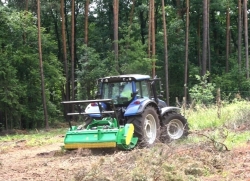
The State Service for Protected Areas has purchased equipment for the maintenance of state parks and reserves for the amount of LTL 7 million and transferred this equipment to the administrations; however, some administrations have been using it inefficiently due to the limited demand for this equipment.
The National Audit Office provided recommendations to the Ministry of Environment and the administrations of the state parks and reserves, which should lead to more efficient use of the assets of the administrations.