


2015-01-20
National Audit Office: not all population benefits from the new maintenance procedure for heating units
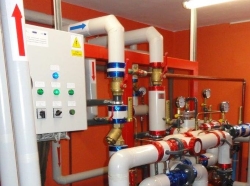 The National Audit Office conducted an audit to assess whether the new procedure for organising the maintenance of heating units in apartment buildings, which entered into force on 1 November 2011, has provided access for consumers to appropriate maintenance and operation services for heating units. “The auditors found that the absence of necessary secondary legislation had resulted in failure to properly implement the heat supply and maintenance provisions of the Law on Heat Sector and to achieve the objectives set out in the Law – not all heating systems have been upgraded and only a small number of the units have been transferred to the population. Also, no conditions have been created to properly maintain the heating systems, and the new heating units maintenance procedure is useful only for part of the population,” said Auditor General Giedrė Švedienė commenting on the audit results.
The amendment of the Law on Heat Sector establishing that the internal heating (including heating units) and hot water system upgrading costs cannot be included in the heating or hot water prices resulted in the loss of a source of funds for the upgrading. However, no measures were provided to ensure the upgrading and repair of heat supply systems (including accumulation of the population’s funds for this purpose). Consequently, separation of the heat supply and heat consumption processes has not been completed yet – about 20 per cent of all heating units have not been upgrading (restructured) yet. The unrestructured heating units do not ensure the efficient use of heat, district heating networks cannot operate in optimum mode, so consumers do not get all the potential benefits and incur additional costs due to the inefficient use of heat.
The auditors stated that the planned transfer of upgraded heating units to the population has been slow, over the period 2012-2014 the share of heating unit owned by the populations increased only by 4 per cent, and there are about 9000 heating units (ca. 50 per cent) that have not been transferred. Until all these units are transferred to heat consumers, it is not possible to finance the upgrading of the remaining 6000 units, because the repair or upgrading costs are not reimbursed to the owners of the units which have not been transferred, i.e. to heat suppliers.
Until the amendment of the Law on Heat Sector, the costs required for the maintenance, repair and renewal of heating units were included in the heat tariff, and the residents of each house in municipalities used to pay an equally amount, irrespective of the actual costs. After abandoning the reimbursement of costs based on the principle of solidarity, people were no longer in identical situations, because part of them were paying for heating and for the upgrading of heating units which, however, was never carried out. As a result, now they have to take care of the upgrading of their heating units and accumulate additional funds for this purpose. In general, the overall heating unit maintenance costs went up for the population, especially for those living in small apartment buildings. It should be pointed out that no measures have been taken to avoid such situation after the adoption of the said amendments of the Law on Heat Sector.
The provisions of the Law on Heat Sector which say that a heat supplier may not provide heating unit maintenance services are valid for the district heat suppliers whose services are used by about half of the country’s population (in Vilnius, Kaunas, and Klaipėda). Therefore, not all heat consumers in Lithuania have the same possibilities to choose a person responsible for the maintenance of heating units. In addition, the auditors noted that one of the main reasons for the inefficient use of heat is the imbalance of the heating systems in apartment buildings; however, the balancing of these systems is not included in the list of mandatory house maintenance works to be carried out without the consent of the population, and people often do not allow persons responsible for the maintenance to fix the heating systems. The operation of such systems prevents the efficient use of heat.
In the auditors’ opinion, the risk of excess heat supply can be avoided by connecting the information systems of municipal and monitoring institutions, or even those of the population, to remote control systems and thus tightening the control of persons responsible for the maintenance of heat units.
The National Audit Office issued recommendations to the Government, the Ministry of Energy, and the Ministry of Environment to help increase the efficiency of heat use in apartment buildings and improve the maintenance of heating units and control of this process.