


2014-01-28
National Audit Office: centralised procurements still fail to ensure full benefits
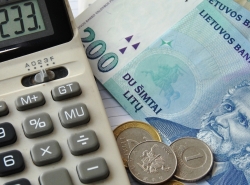
Over the period from 2008 to 2012, the value of centralised public procurements carried out through the public entity Central Purchasing Organization (CPO) went up almost 28 times, totalling LTL 234.8 million in 2012. This year the volume of procurements through the CPO is likely to grow even more rapidly due to new provisions of the Law on Public Procurement pursuant to which contracting authorities will have to buy goods, services and works only in a centralised manner unless they can purchase the same cheaper and faster in another way. The National Audit Office conducted an audit to evaluate the efficiency of the use of public sector funds for carrying out centralised public procurements through the CPO.
“Centralised public procurement enables contracting authorities to avoid complex and lengthy procurement procedures, however, it does not always ensure the quality and lower price of goods, services and works purchased through the CPO,” said Auditor General Mrs Giedrė Švedienė summing up the results of the audit.
The audit revealed a lack of communication between contracting authorities and the CPO. Also, the CPO has no information about unreliable suppliers and contract execution quality. There are cases when services/works supplied are of poor quality, when goods delivered are of low quality, expensive or other than those which were actually purchased.
In addition, the current electronic catalogue CPO.lt was developed without considering the increasing number of users, expansion of purchase categories, and diversity of orders; however, introduction of an improved version of the catalogue is delayed, so its advantages are not available to all tenderers. Due to technical deficiencies of the catalogue CPO.lt and actions brought by suppliers which hinder procurement procedures, the CPO does not always ensure continuous use of the catalogue.
Assessment of the procurement of medicines showed that the price of medicinal products purchased through the CPO in many cases is lower than it would be purchasing these products independently; however, it happens that contracting authorities are not able to purchase nominal medicinal products because they are supplied by a single manufacturer which does not always offer the particular product needed. Also, a contract on purchasing medicinal products is concluded for six months, it may not be extended, so when ordering smaller quantities of medicines health care institutions pay a higher price. It should be noted that the CPO is working to change the current situation by improving the conditions of the preliminary agreement.
Currently, the activities of the CPO activities are financed from the state budget. The increased workload will require more staff and the expanding range of the catalogue CPO.lt will demand higher costs for the administration of preliminary agreements. In order to increase the efficiency of CPO performance and ensure cost-effective use of the state budget funds, operational administrative costs could be covered by collecting an administrative fee from suppliers.
The National Audit Office issued recommendations to the Ministry of Economy and the CPO to facilitate more efficient use of state funds and administrative resources.