



2013-08-08
Socialisation of children with behaviour problems should be paid more attention
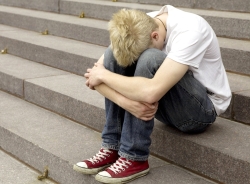 There are six Children Socialization Centres (CSC) in Lithuania that are responsible for socialization, education and social care assistance to runaway and homeless children, and children susceptible to crime to help them to deal with misbehaviour and develop more meaningful concepts of life. The National Audit Office performed the audit to evaluate if social care assistance provided to children is organised properly and effectively.
“Having conducted the audit we established that there are no prerequisites for effective socialization of children: co-operation between institutions responsible for development, care and education of children during their stay in the CSCs is insufficient whereas assistance they provide is not sufficiently individualised. Statistical data on repeated engagement of children in criminal behaviour and the character of crimes they commit is not accumulated after they leave the CSCs, therefore it is difficult to evaluate effectiveness of CSCs activity. As a result, the policy is formulated without having sufficient background information”, said the Auditor General Ms. Giedrė Švedienė when summarising the audit results.
Effective socialization of children is hampered by the fact that CSCs and municipalities do not work with parents during the child’s stay at the CSC and that parents or the child’s legal guardians are not legally obliged to attend courses on improving their communication with children. In Lithuania there is no system in place defining who and how should work with parents, guardians or custodians of children who receive assistance in CSCs.
In 2011 the child’s length of stay at CSC was limited to one year. As a consequence, the number of prolonged lengths of stay increased ten times and the number of children returns to the CSCs has also increased. In the absence of programmes for children who have reached maturity during their stay at the CSCs that could help them to continue resocialization, provide accommodation and employment upon necessity etc., children‘s prosocial skills are not being developed; they return to their previous behavioural patterns because they immediately occur in the same environment that have determined their getting into CSCs.
The audit also established that CSCs are not specialized according to the child’s age and type of emotional and behavioural disorder. Children with such disorders (80% children at CSCs according to the 2012 data) require specialised assistance and individual approach taking into consideration the level of complexity of individual difficulties.
In order to make children co-authors of the measures within their care assistance plans and encourage their responsibility for their implementation it is important to involve them into development of the plans thus ensuring that they understand what behaviour changes they are expected and how their progress would be evaluated and encouraged.
However, the audit established that children do not always take part in the development of their care assistance plans and their amendments are not always discussed and agreed with the child. Adaptation of children at the CSCs is not devoted sufficient attention either. Individualised assistance is not ensured do to the lack of specialist teaching assistants – psychologists, social pedagogues and specialized pedagogues.
Besides, in the absence of unified and appropriate system for evaluation of the child behaviour, child’s progress and behaviour changes are evaluated differently in different CSCs. There are cases when different teachers in the same CSC evaluate the child’s progress differently. It is especially difficult to carry out continuous monitoring of socialization, to measure effectiveness of implemented measures and to make further planning of work when children are moved from one CSC to another or return repeatedly to a different CSC where his/her behaviour was evaluated using a different system.
Having conducted the audit the National Audit Office provided recommendations for the Ministry of Education and Science intended to help them to achieve better results in implementing the average child care measure and socialization of children.