




2013-01-17
National Audit Office: rehabilitation of areas damaged as a result of the use of subsoil resources is very slow
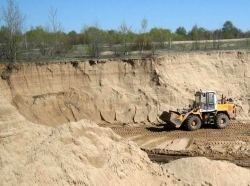
The National Audit Office conducted an audit which aimed to assess organisation of rehabilitation of land areas damaged by subsoil resources mining and quarrying and their maintenance control. The audit findings have revealed significant weaknesses in the fields of inter-institutional cooperation, regulations laying down procedures and rules, as well as shortcomings of accounting and control. As a result, obsolete quarries tend to become illegal dump sites, excavated areas are much larger than indicated in respective projects, or illegal excavations are taking place, and small fines do not have a deterrent effect”, – said Auditor General Giedre Švedienė.
Currently, there is no exact information on the amount of areas damaged by quarries and peat lands. Absence of such information makes it is impossible to effectively manage their reduction and landscape restoration processes.
The audit findings of the National Audit Office demonstrate that quarries and peat lands damage excess land areas. If inter-institutional cooperation were closer and if adequate controls were imposed in all quarrying stages, the area of damaged land would most likely be smaller. Mining-rehabilitation projects are agreed between several authorities: municipalities, National Land Agency, Geological Survey of Lithuania, regional environmental protection departments, and others.
According to public auditors, there are no strict requirements in place in the country to clean up the affected area immediately after the excavation of natural resources. As a result of failure to rehabilitate quarries, illegal dumping sites often start in such places, posing danger to human life because of their steep slopes, meanwhile failure to rehabilitate peat lands often leads to huge fires.
The National Audit Office pointed out that if natural resources are exploited without due supervision, later rehabilitation of these area may have to be financed out of public funds. In addition, Lithuania has a number of areas damaged by quarrying which have had no user for a long time, but municipalities do not hurry to take the opportunity to receive support for their rehabilitation from the Special Climate Change Programme or Environmental Support Programme and to clean up the quarries which have turned into dump sites. In fact, practice has shown that rehabilitation of such abandoned quarries costs a dozen and sometimes several dozens times more than rehabilitation of non-contaminated quarries (for example, rehabilitation of one hectare of Kazitiškis quarry located in Ignalina district, which had been turned into a dump site, cost about LTL 564 thousand, which is 75 times more expensive than development of a non-contaminated quarry into a forest).
Another problem is related to illegal mining. According to expert estimates, illegal mineral extraction in Lithuania accounts for about 10 per cent of the level of legal mining; however, the auditors saw that no accounts of land areas damaged by illegal mining have been kept and no prevention of such mining has been taken. In addition, the existing illegal mining control system and administrative penalties have been ineffective. Currently, these penalties are not linked with the damaged land area therefore the benefit received by offenders is much higher than the penalty. The penalty can be paid by selling minerals illegally extracted from a plot of land of 10-15 square meters of the damaged area.
The National Audit Office put forward recommendations to the Ministry of Environment and Ministry of Agriculture.