


2026-11-12
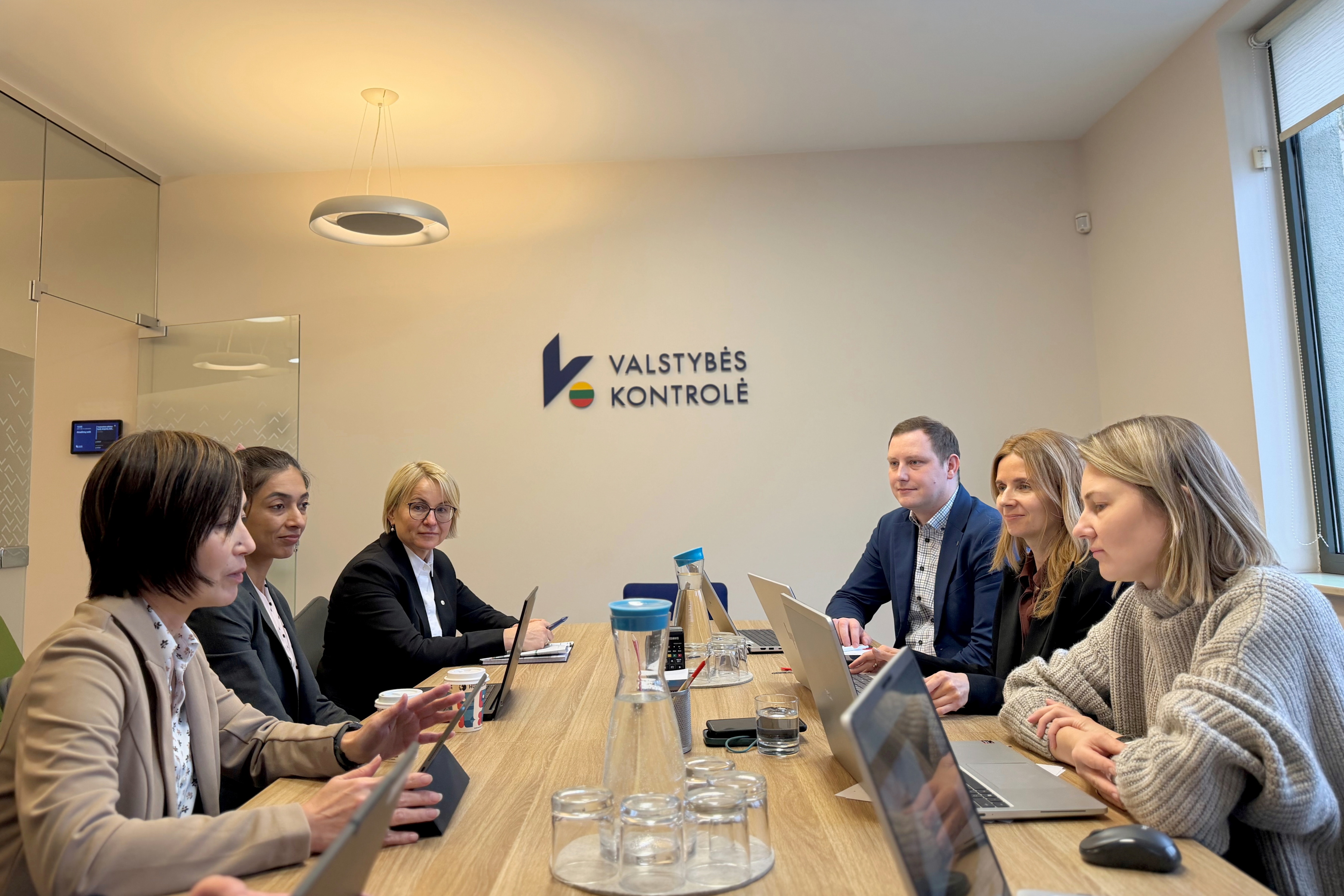 How can we ensure that the state is able to fund the most important needs of its citizens, not only today but also in the future? This question was one of the most important topics at today’s meeting at the National Audit Office with experts from the International Monetary Fund (IMF).
Representatives of the National Audit Office’s Fiscal Monitoring Centre discussed with IMF experts the state of Lithuania’s public finances, the budgetary outlook for 2026–2029, compliance with fiscal discipline rules and changes to the pension system.
Much attention was paid during the meeting to the draft budget for 2027–2029 and fiscal risks. Projections for general government debt and the deficit, prepared by the independent fiscal institution, were presented. It was discussed that adjustments to the tax system are inevitable in order to ensure the sustainability of public finances, given that expenditure needs are constantly rising.
During the discussion of the draft budget for 2027–2029, attention was also paid to fiscal discipline rules. Fiscal discipline is a mechanism that helps to ensure that the state can finance its commitments and service its debt over the long term without encountering serious financial difficulties, and that future generations do not have to pay for today’s decisions through higher taxes or reduced public services.
Regular cooperation with IMF experts provides an opportunity to discuss the challenges facing Lithuania’s public finances within a broader international context, and to share assessments and insights. This is important for achieving long-term sustainability of public finances, on which the ability to provide the public services needed by the population depends.
The International Monetary Fund is an international organisation comprising 191 member countries, which aims to promote international financial stability, sustainable economic growth and the well-being of its member countries.