


2026-11-12
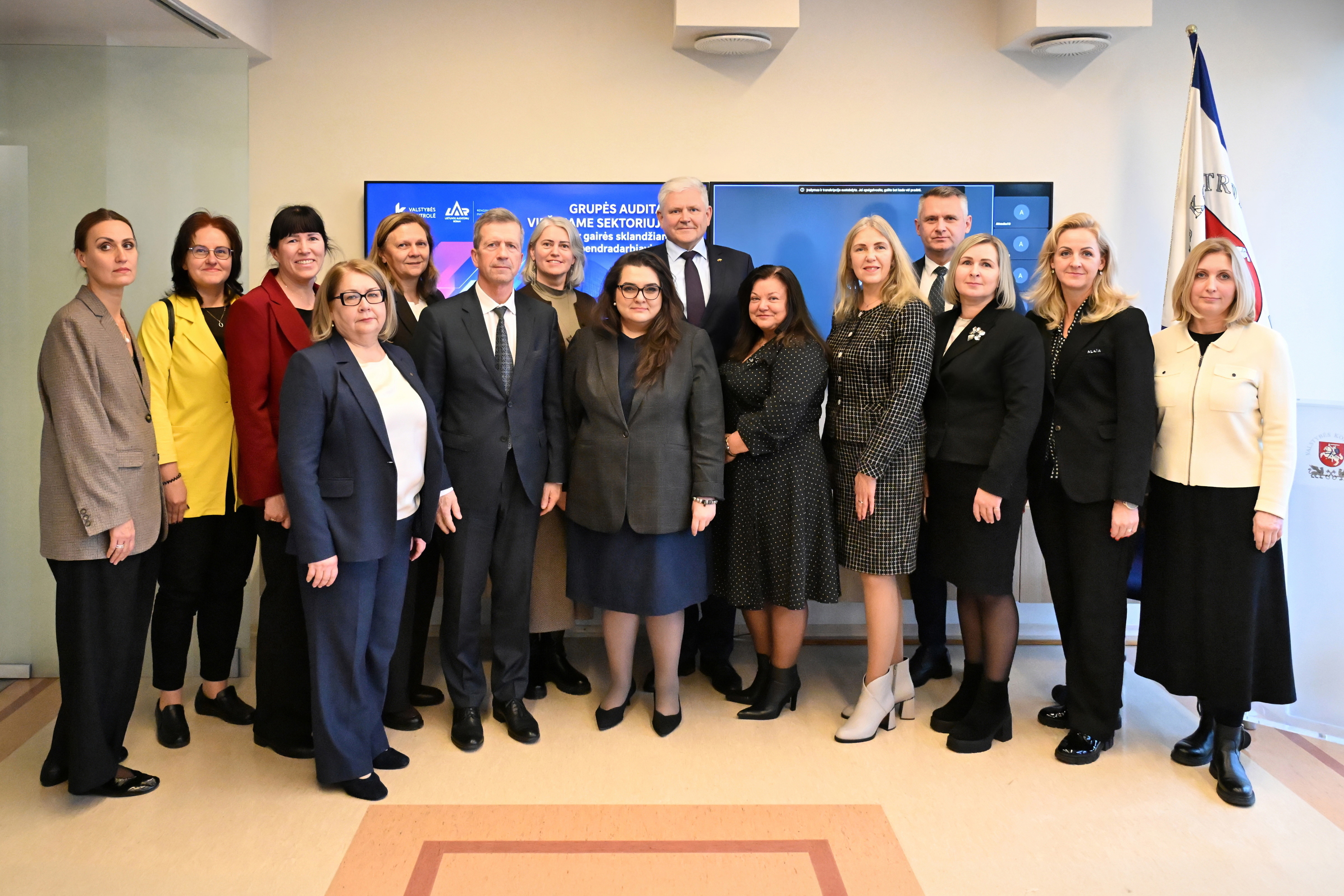 At a conference held at the National Audit Office (NAO) on 12 November “Group Audit in the Public Sector: Changes and Guidelines for Smooth Cooperation”, the auditing community, representatives of the Ministry of Finance and municipalities discussed key changes to public sector reporting and audit regulation for 2026.
The National Set of Annual Accounts covers more than 3,100 public sector entities and state and municipal administration bodies, whose assets, according to the results of the financial audit of the 2025 National Set of Annual Accounts carried out by the National Audit Office, exceed EUR 90 billion, while their liabilities amount to nearly EUR 40 billion.
At the event, organised by the National Audit Office in cooperation with the Lithuanian Chamber of Auditors (LAR), it was emphasised that, in order to ensure the reliability of these data as a whole, more transparent management of public resources and higher audit quality, smooth cooperation between all parties involved in the audit process and the timely exchange of information necessary for the audits are of paramount importance.
“When deciding what the state can afford, we need to know with certainty what assets we hold and what liabilities we have already incurred. When preparing the 2026 accounts, data on state and municipality owned enterprises classified as part of the public sector will be included for the first time. The public will see a more detailed picture of the state’s finances. It is our duty, as auditors, to independently assess whether this picture can be trusted,” says Auditor General Irena Segalovičienė.
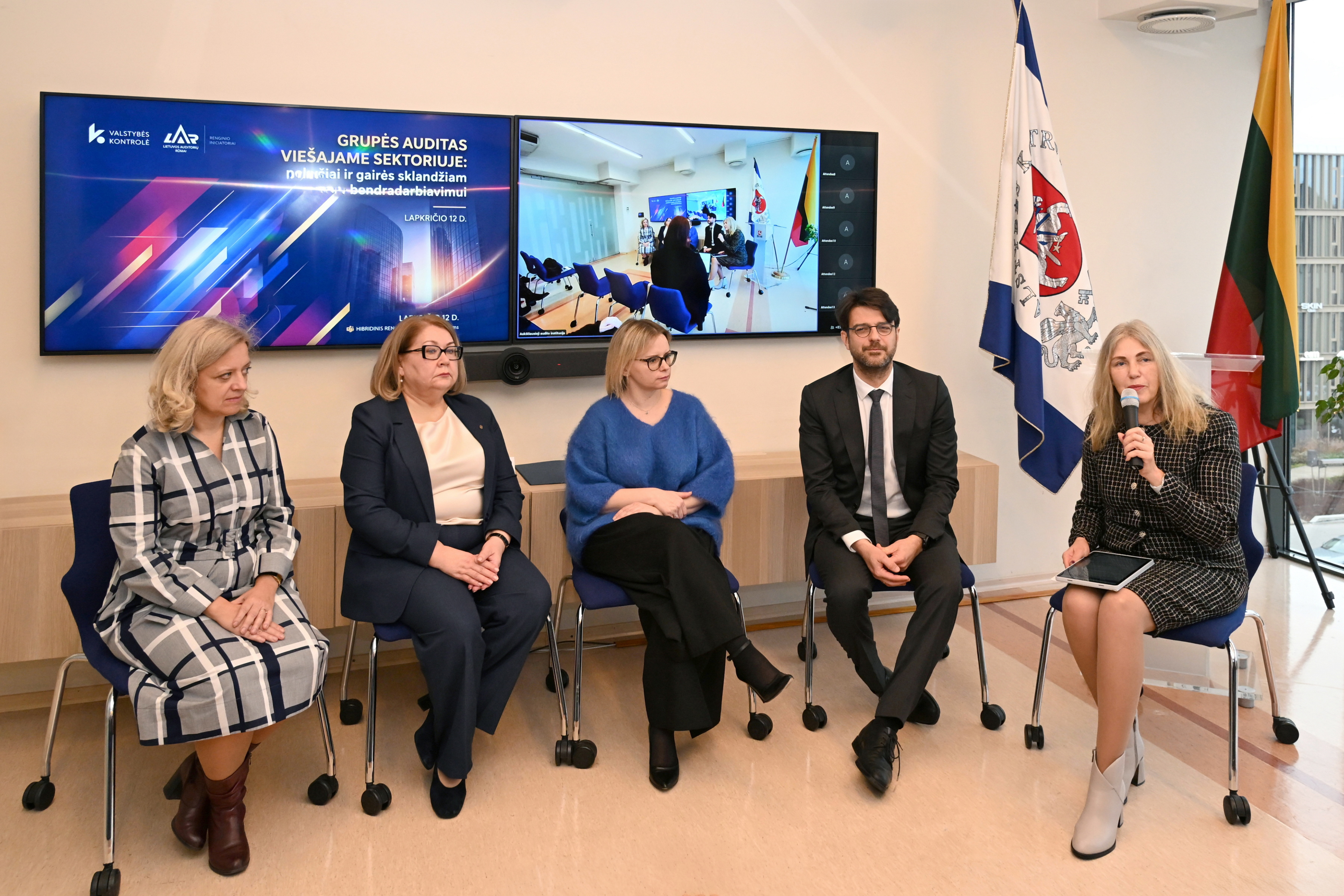 One of the key issues discussed at the conference was the changes to public sector financial reporting due to come into force in 2026 and their practical implementation. During the event, Ingrida Muckutė, Director of the Department of Reporting, Audit, Property Valuation and Insolvency Policy at the Ministry of Finance, reviewed the legal framework and the obligations of entities to provide data, identified the main challenges arising from the changes, and offered practical advice on the transition to the new requirements.
The conference placed particular emphasis on the group audit process and smooth cooperation between the group auditor and the component auditors. Danguolė Krištopavičienė, Head of the Financial Audit Department 1, and Lina Venckūnaitė, a methodologist from the Innovation and Methodology Department at the National Audit Office, presented the methodological requirements for financial audits of the National Set of Accounts and the State Set of Accounts, discussed the audit process, guidelines for cooperation with component auditors, and the challenges that have emerged in the course of previous audits.
Simonas Rimašauskas, a partner at Deloitte Lithuania and representative of the Lithuanian Chamber of Auditors, shared his insights on how companies can prepare effectively for the audit process and on its key practical aspects.
In the discussion that concluded the conference, participants addressed specific issues arising from the application of the new requirements, shared their experiences and sought solutions to strengthen cooperation between the various parties involved in the audit process.
The dialogue initiated by the NAO and the LAR provided an opportunity for the various parties involved in the audit and reporting process to discuss in advance the forthcoming changes and the practical aspects of their implementation. This is an important step towards ensuring that public sector financial statements are not only properly prepared but also assured by an independent auditor’s opinion.