


2026-10-22
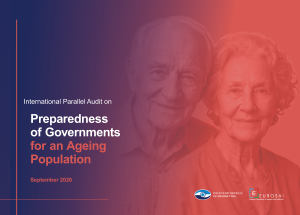 As part of the international parallel audit “Preparedness of Governments for an Ageing Population”, nine countries [1] were assessed on how they are preparing for the challenges posed by an ageing population and whether they are ready to ensure the well-being of older people.
The well-being and quality of life of older people after retirement were examined in the international audit using the examples of Lithuania, Poland and Israel. Based on the results of national audits in these countries, a comparison was made of the opportunities available to older people to continue working after reaching retirement age and how governments are addressing the issue of loneliness. The situation in Lithuania was assessed in the findings of the public audit “Promoting Active Ageing”, carried out by the National Audit Office in the spring.
According to the findings of the international audit, life expectancy in the countries audited [2] is expected to increase by approximately 3–4 years by 2050, while the ratio of older people to the working-age population rose steadily in all countries between 2000 and 2024. These demographic trends are placing increasing pressure on healthcare, long-term care, pension and social security systems. In Lithuania, this challenge is also becoming increasingly pressing. According to National Audit Office’s audit findings, at the start of 2026, 28.8 percent of the country’s population were aged 60 and over, and by 2100 this proportion is forecast to rise to 43.5 percent.
“Increasing life expectancy is a tremendous achievement for society, but at the same time it raises a very specific question for the state: are we providing people with the opportunities not only to live longer, but also to remain active and independent for as long as possible, and to participate in society? Ageing policy cannot be limited to declarations or isolated measures. We need clear objectives, accountability and solutions that reach the individual: providing opportunities for those who wish to continue working, learn or participate in community life, while ensuring that those experiencing loneliness or in need of support receive the necessary services. I cannot imagine a demographic policy without a policy on ageing, which is why I urge that, while addressing the birth rate, we must not forget the strategy for active ageing,” emphasises Auditor General Irena Segalovičienė.
In Lithuania, the employment rate among older people is close to the OECD average, but there is a lack of specific employment targets
The opportunities for older people in Lithuania, Poland and Israel to continue working after retirement vary. In Lithuania in 2024, 13.2 percent of people aged 65 and over were in work – similar to the average for Organisation for Economic Co-operation and Development (OECD) countries (13.7 percent). Meanwhile, in Poland, the employment rate for this age group stood at 6.1 percent, and in Israel at 21.1 percent.
In Lithuania, it is possible to work while receiving a full old-age pension; however, neither Lithuania nor Poland has set specific targets for the employment of people of retirement age. Israel has set such targets – by 2030, it aims for 43.5 percent of men aged 67–74 and 28.5 percent of women in this age group to be in work. Nevertheless, the audit findings note that the measures in place in all three countries are insufficient, to significantly increase the opportunities for older people who are willing and able to work to continue their professional careers.
Israel is implementing the “Seniors at Work” programme, which aims to change the labour market’s attitude towards older workers and create more employment opportunities for them. The programme helps people aged 60 and over to look for work, provides them with the necessary skills and acts as an intermediary in finding suitable jobs. The country also operates a special programme for the employment of older people in the civil service.
The National Audit Office has set out the measures needed to increase the employment of people of retirement age who are willing and able to work, while combining work and a pension, in the recommendations of the public audit carried out in the spring. It was recommended that the Ministry of Social Security and Labour of the Republic of Lithuania remove age restrictions on working in the public sector, and take decisions on the introduction of flexible working arrangements, additional safeguards, health promotion or other support measures for older people, taking into account their identified needs; to plan and implement integrated measures to prepare pre-retirement-age individuals for retirement, which would help them make a smooth transition to a new stage of life in retirement and remain active in society and/or the labour market; as well as setting out the target employment rate for people of retirement age in strategic planning documents and monitoring changes in this rate.
Loneliness – a recognised problem, yet those experiencing it remain overlooked
Loneliness is another issue examined by auditors in Lithuania, Poland and Israel. Although different measures are in place in each country, the international audit revealed that all three countries lack effective ways of identifying lonely older people and ensuring they receive the support they need.
A survey conducted as part of the National Audit Office’s audit showed that 34.5 percent of older respondents had felt lonely very often, often or sometimes over the past year. As many as 87 percent of those surveyed who had experienced loneliness did not seek help, whilst 52 percent did not take part in activities that could help reduce their feelings of loneliness.
In Lithuania, loneliness is not identified in strategic documents as a distinct social policy issue; there is a lack of indicators to measure it, and no institution is responsible for the systematic identification of lonely older people. A similar situation is observed elsewhere: in Poland, loneliness is not measured by official indicators, while in Israel, although the indicator is measured, only 18 percent of lonely older people are identified. This shows that simply recognising the problem and monitoring its scale is not enough to ensure that support reaches those who need it; solutions are therefore essential.
The map of well-being indicators for older people being introduced in Israel is one example of how we might contribute to tackling the problem of loneliness among older people. With a view to achieving a breakthrough in this area, the National Audit Office recommended to the Ministry of Social Affairs and Labour as early as this spring that it assess the impact of loneliness on people’s mental and physical health, their quality of life and the state’s social and healthcare systems; set a target for the prevention and reduction of loneliness; an indicator of the level of loneliness amongst older people and a target value for it, establish assessment criteria for identifying lonely individuals, plan measures to reduce loneliness, and devise measures to encourage lonely people to seek help.
Direction is already set, but what matters most is the impact of the measures
The general conclusions of the international audit reveal that it is important for states to move from declared policy directions to concrete, funding-based actions, clear responsibilities and measurable outcomes. This requires a long-term and cross-sectoral approach to public policy, so that increased life expectancy translates into better health, greater independence and more active participation in society.
In June 2026, Lithuania adopted the Framework Law on the Policy for Older People, which aims to strengthen the coordination of policy in this area and to define the responsibilities of institutions more clearly. However, the results of the international audit serve as a reminder that legal and strategic frameworks alone are not enough – real progress will depend on how the envisaged solutions are implemented and what tangible changes they bring about in the lives of older people.
In implementing the National Audit Office’s recommendations, the Ministry of Social Affairs and Labour, the Ministry of Health, and the Ministry of Education, Science and Sport have committed to implementing specific measures regarding employment, voluntary work, and access to social and health promotion services. It is important that these measures are implemented on time, as promised. Meanwhile, in the auditors’ view, the measures proposed by the Ministry of Culture are not geared towards practical changes aimed at increasing the participation of older people in cultural activities.
[1] Nine supreme audit institutions took part in the international parallel audit „Preparedness of Governments for an Ageing Population“: those of Albania, Israel, Poland, Lithuania, Malta, North Macedonia, Paraguay, Portugal and Slovakia.
[2] Albania, Israel, Poland, Lithuania, Malta, North Macedonia, Paraguay, Portugal, Slovakia.
International Parallel Audit on Preparedness of Governments for an Ageing Population