



2026-10-13
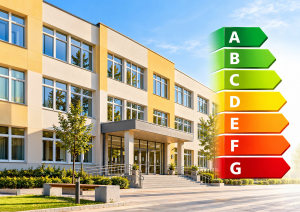 The renovation of public buildings should reduce energy consumption, building maintenance costs and the expenditure allocated to this. However, an audit carried out by the National Audit Office entitled “Improving the Energy Efficiency of Public Buildings” showed that 79 percent of the renovated buildings assessed by the auditors did not achieve the heat energy savings declared in their energy performance certificates. The actual savings in these buildings were, on average, 40 percent lower than declared.
Once renovation is complete, the actual reduction in energy consumption is not systematically monitored – the outcome is assessed on the basis of theoretical calculations set out in the energy performance certificates, meaning the state cannot reliably assess the results of investments in building renovation.
“If, after renovation, a building saves significantly less energy than planned, we first need to know why. Was the problem in the planning of the investment, or did the outcome depend on other factors? At present, the state cannot answer these questions because it does not systematically monitor the actual results. When investing public funds, it is not enough to know that a building has been renovated – we need to know what we have gained from this investment. This information is essential when planning future renovations, so that we can make more informed decisions and avoid repeating what has not yielded results,” says Auditor General Irena Segalovičienė.
Ambitious energy-saving targets
In implementing the EU’s energy efficiency requirements, Lithuania will have to save significantly more energy in public buildings by 2030. In the plans approved in 2026, the target energy savings have been increased from 80 to 605.5 GWh – a 7.6-fold increase. Under the EU directive, energy consumption in the public sector must fall by at least 1.9 percent each year.
Simply renovating more buildings will not be enough to achieve these targets – every renovation must ensure the greatest possible actual energy savings. It is therefore particularly important not only to calculate the planned savings, but also to verify after the renovation whether they have actually been achieved.
Before planning future investments, it is essential to establish why the planned result was not achieved
Lower-than-planned energy savings may be due to various reasons: inaccurate initial data and calculation methods, changes in the building’s use or user behaviour, climatic conditions, improperly adjusted building services systems, or shortcomings in the quality of construction work.
It is therefore not enough simply to establish that the planned result has not been achieved – it is important to find out why. This would enable decisions to be made on what needs to be changed during the planning, renovation or subsequent operation of buildings, so that the same problems do not recur in other projects.
In order to reduce the gap between calculated and actual energy savings, the National Audit Office recommended that the Lithuanian Energy Agency ensure that the calculated and actual energy savings of renovated public buildings are analysed, that the causes of discrepancies are identified, and that proposals for measures to reduce these discrepancies are submitted to the institutions responsible for shaping public building renovation policy and to project implementers.