


2026-10-09
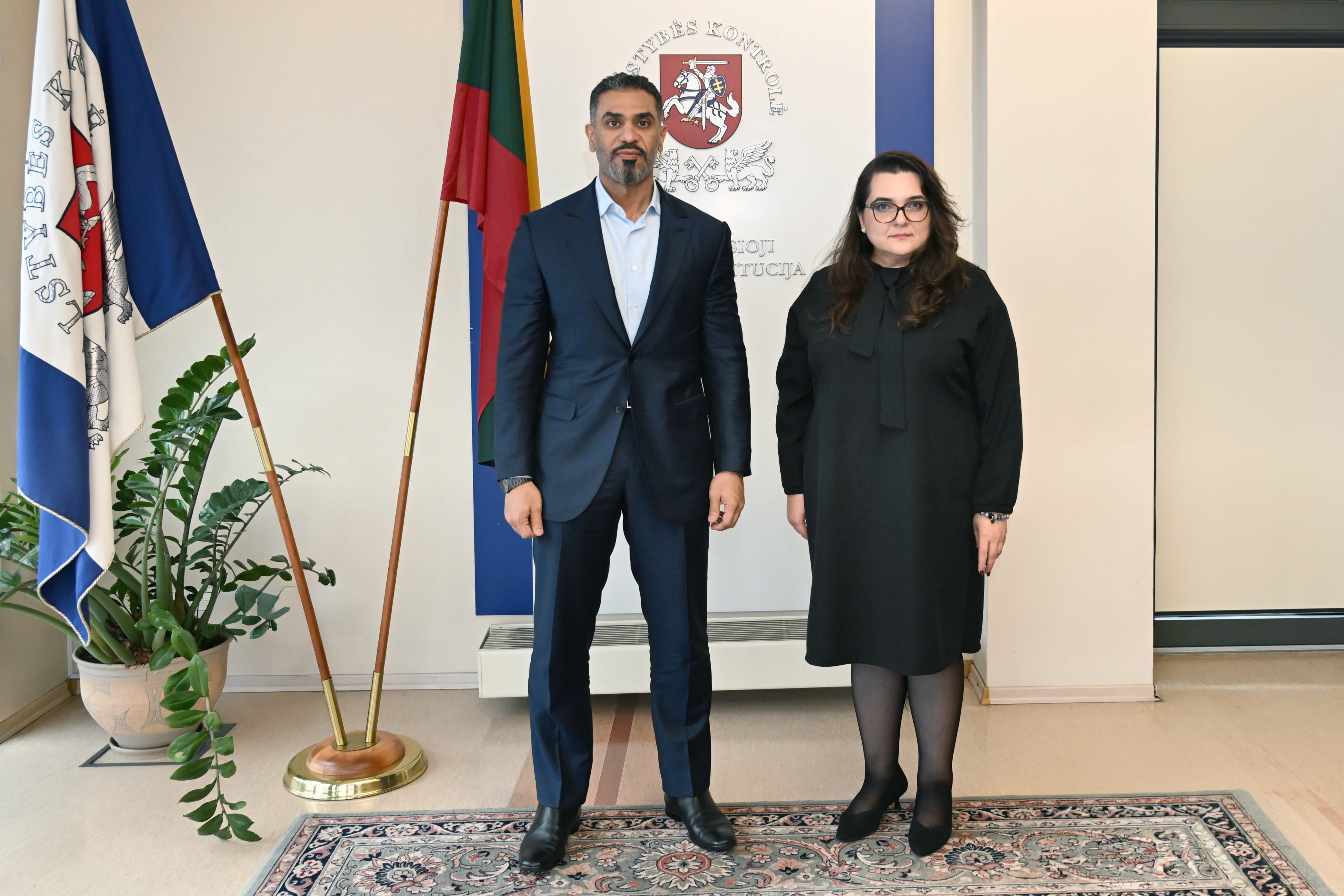 An official meeting with the delegation of the United Arab Emirates Accountability Authority (UAEAA), led by the Chairman of the institution, His Excellency Humaid Obaid Khalifa Obaid Abushibs (Humaid Obaid Abushibs), took place at the National Audit Office of Lithuania.
During the bilateral meeting, which was also attended by Deputy Auditor General Živilė Kindurytė, Head of Administration Egidijus Purlys, Head of the Communication and International Relations Department Lina Nuobarienė, and Audit Methodology Advisor of the Innovation and Methodology Department Akvilė Dovydaitytė, Auditor General Irena Segalovičienė and the Chairman of the UAEAA discussed the operational priorities of the supreme audit institutions, exchanged insights on the specificities of the institutions' mandates, and discussed areas of mutual interest and potential directions of cooperation.
“Although our institutions operate in different contexts and have distinct mandates, we face very similar questions—how to strengthen audit impact, better leverage technology, and ensure that public sector accountability creates real value for the state and its citizens. Today, as data, artificial intelligence, and the ability to respond swiftly to emerging risks become increasingly vital, meetings like this allow us not only to compare experiences, but also to identify more clearly where we can learn from one another. We see potential for practical, mutually beneficial cooperation and continued dialogue,” says Auditor General I. Segalovičienė.
Humaid Obaid Abushibs has led the UAEAA since late 2022, following his appointment to the position by the President of the UAE. Humaid Obaid Abushibs represents his country on the Governing Board of the International Organization of Supreme Audit Institutions (INTOSAI) and actively contributes to the fields of audit innovation, digital technologies, application of artificial intelligence, transparency, and public sector accountability.
he UAEAA is the Supreme Audit Institution of the United Arab Emirates, reporting directly to the President of the country. The institution conducts financial and performance audits, evaluates internal control systems, implements transparency and accountability standards in the federal government, and shapes policies for combating corruption and protecting public funds.