



2026-10-06
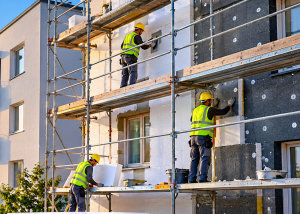 Lithuania has committed to renovating more than 2 million square metres of public buildings by 2030, which may require a further EUR 681 million. However, the National Audit Office’s audit, “Improving the Energy Efficiency of Public buildings”, shows that before allocating the millions needed for renovation, a simpler question must be answered: do the state and municipalities need all the buildings in which they plan to invest?
The audit found that the renovation of public buildings is not sufficiently linked to the management of state-owned property. Most state property managers do not systematically assess how much property they need to carry our their functions. This creates a risk of investing in buildings that may be disposed of in the long term.
In 2024, the state owned 9.02 million square metres of property – more than 25,000 objects. Although its total area decreased by 8.4 percent between 2020 and 2024, maintenance costs doubled over the same period – from EUR 176 million to EUR 354 million per year.
“Renovating a building that the state will not need in the long run is not cost-effective. This involves not only investment in its renovation, but also ongoing costs for heating and maintenance. This is public money, which must be invested where it creates long-term value. Therefore, before allocating hundreds of millions of euros to renovation, we must assess how much property we hold that is not essential for the provision of public services, dispose of it, and invest only in what is truly necessary,” says Auditor General Irena Segalovičienė.
Before allocating millions to the renovation of public buildings, it is essential to assess which property the state actually needs
Lithuania has committed to renovating at least 3 percent of the designated floor area of public buildings each year – a target set out in the Energy Efficiency Directive. By 2030, the plan is to renovate nearly 2.2 million square metres, but between 2021 and 2025 only about a fifth – 436,000 square metres – was renovated. Taking into account projects already underway and the funding planned for 2026–2027, around 970,000 square metres of public building floor area would be renovated by 2030. The investment required to renovate the remaining 1.2 million square metres could amount to around EUR 681 million.
When planning future investments, it is important to regularly assess whether the available area meets the institutions’ needs, how efficiently it is being used, and which part of the property could be disposed of.
However, such a systematic assessment is only ensured for state-owned property managed centrally. The Turto Bankas (Property Bank), which centrally manages state-owned property, currently manages only 7.9 percent of all state-owned property. Ministries, their subordinate institutions and other state property managers do not systematically assess how much property they require and how efficiently it is being used. Consequently, before investing in the renovation of a building, it is not always assessed whether this property will be required by the state in the long term.
One of the most important projects for optimising state-owned property is the redevelopment of the Goštautas quarter in Vilnius into a centralised campus for state institutions. The plan was to bring state institutions together in one place, make more efficient use of administrative area, and dispose of some of the energy-inefficient and costly-to-maintain buildings. However, at the time of the audit, a final decision on the implementation of the entire project has not yet been taken.
The National Audit Office proposes reducing the total area of state-owned property
The National Audit Office recommends that the Government set out specific measures to reduce the total area of state-owned property and to manage the majority of it centrally, and that it implements these measures. To this end, it is first necessary to systematically assess how much and what type of property state institutions actually need to carry out their functions, and how efficiently it is being used. This would enable a better assessment of state institutions’ property requirements and the systematic disposal of buildings that are no longer necessary for the execution of their functions.
A smaller area of managed property would mean lower costs for heating, maintenance and repairs. At the same time, the area of buildings requiring renovation in the future would be reduced, as would the need for the necessary investment.