




2026-09-03
 More than three years after the National Audit Office’s audit “Municipal Waste Management”, two of the seven recommendations made have been implemented. The most important changes are still to come: more waste must be recycled rather than incinerated or disposed of in landfill sites; residents must be provided with better facilities for sorting waste; and waste management must be planned and evaluated on the basis of reliable data.
“Recent high-profile waste management incidents in Vilnius serve as a reminder that isolated crises are often the result of an inefficient system. Waste suitable for recycling in Lithuania is still, all too often, incinerated or sent to landfill, rather than being returned to the economy. For the situation to change, it is essential to develop the infrastructure for collecting food, textiles and other waste in a timely manner, to increase recycling capacity and to ensure reliable data for decision-making. The system must facilitate sorting, but residents themselves must also make more active use of these opportunities, as too much waste suitable for recycling still ends up in mixed waste bins,” says Auditor General Irena Segalovičienė.
We are sorting more, but too little is still being recycled
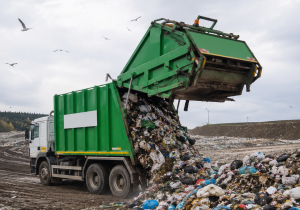
Although residents are sorting waste more and more actively, a large proportion of recyclable waste is still being lost – it ends up in the mixed municipal waste stream and is ultimately incinerated or disposed of in landfill sites.
An audit in 2023 showed that although the proportion of residents sorting their waste rose from 40 percent to 60 percent between 2016 and 2021, a significant amount of waste suitable for recycling still ended up in mixed municipal waste – packaging and other secondary raw materials accounted for around a third of the total volume. In 2021, there were 240,200 tonnes of such waste in mixed municipal waste, but only 8.5 percent of it was ready for recycling. The vast majority was incinerated or sent to landfill. The audit also revealed marked differences between municipalities in the organisation of waste management. Average monthly expenditure per resident ranged from EUR 0.8 in the Rokiškis district to EUR 4 in the Molėtai district, while in 19 municipalities, waste collection services were not provided to all residents.
First concrete changes following the audit
The first concrete changes are already visible following the National Audit Office’s audit. All 60 municipalities have begun to apply uniform criteria for assessing whether waste management services are being provided to residents. This paves the way for a more consistent assessment of service availability across the whole of Lithuania.
Controls on imported municipal waste have also been strengthened – measures have been put in place to ensure that imported municipal waste is recycled rather than incinerated or disposed of in landfills.
The work required to increase waste recycling has not yet been completed
One of the most important changes still to come is increased recycling and reuse of municipal waste. At the time of the audit, 596,000 tonnes, or 44.33 percent, of municipal waste was being recycled annually in the country. By implementing the audit’s recommendations, the aim is to create the capacity to recycle an additional 128,200 tonnes of waste per year by the end of 2029. To this end, the waste recycling infrastructure must be modernised and expanded to enable greater recycling of textiles, furniture, plastics, packaging, bio-waste, electronic waste and other types of waste.
There is still a lack of data on waste management
Reliable and comparable data are essential for understanding how municipal waste is managed in municipalities and regions, and where changes are needed. Following the audit, guidelines were drawn up on how to complete and submit annual reports on municipal waste management systems in municipalities and regions via the Unified Information System for the Accounting of Products, Packaging and Waste (GPAIS). The data submission forms in GPAIS were also updated and the procedure for submitting information was amended. However, not all municipalities submitted their annual reports for 2025.
Data from all the country’s municipalities would enable a more accurate assessment of waste streams, the planning of necessary capacity and the taking of informed decisions regarding the entire waste management system.
Although the audit was completed in 2023, monitoring of the recommendations continues
The National Audit Office will continue to monitor how the audit recommendations are being implemented and whether the planned changes are being achieved. Detailed information on the progress made in implementing each recommendation can be found on the National Audit Office’s recommendation monitoring page.