


2026-07-13
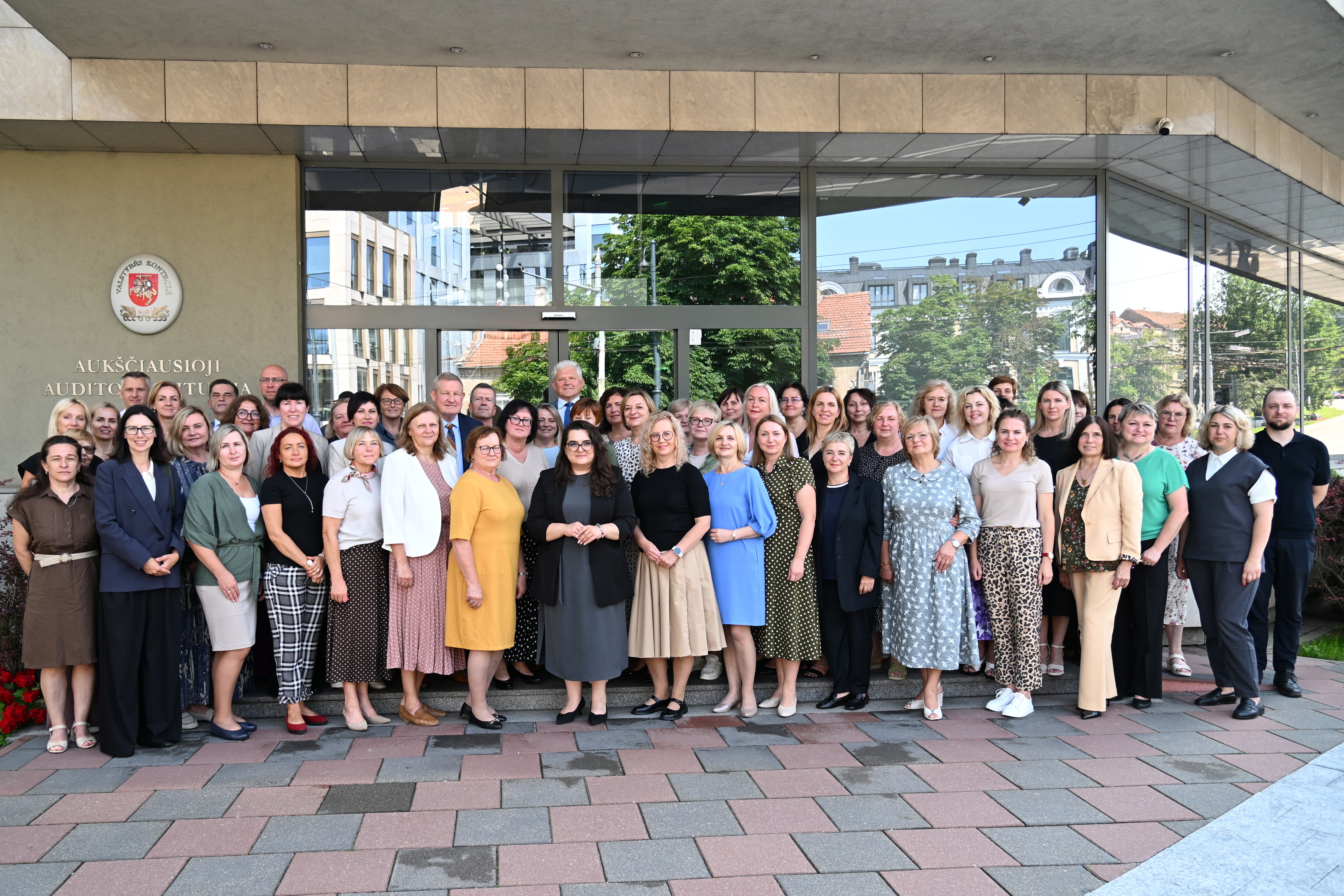 Today marks an exceptional event at the National Audit Office—the National Audit Office, together with 56 Municipal Control and Audit Services (SKAT), has agreed to launch a cooperative public performance audit titled “Non-Formal Education System for Children.” During the kick-off meeting held at the National Audit Office, Auditor General Irena Segalovičienė and the municipal controllers representing the SKAT started signing the cooperation agreements.
“Non-formal education for children is much more than just after-school activities – it is the foundation of the state’s strategic security and social capital. At school, children learn what the world knows. Through non-formal education, they learn who they are. High-quality and accessible after-school clubs serve as the strongest preventive system, as they directly strengthen children’s physical and mental health, protect them from addictions, and create equal opportunities for everyone, regardless of their family’s financial situation or place of residence. Properly ensuring this network throughout Lithuania means investing in our families and our demographic policy. It is much cheaper and wiser to raise strong children than to later “repair” broken adults. That is precisely why we are seeking to assess whether this system is functioning as we expect, and what solutions are needed to ensure it creates the greatest value for children and society,” says Auditor General Irena Segalovičienė.
The National Audit Office’s 2026 Activity Plan includes a performance audit titled “Non-Formal Education System for Children,” and since SKAT are assessing or plan to assess the area of non-formal education for children in 2026, it was decided to join forces in order to assess systemic problems more consistently and compare municipal practices.
The audit will assess whether the state-established system for funding non-formal education for children enables the achievement of the intended goals, whether the quality and accessibility of services are ensured, how state and municipal funds are used, and whether they reach the children with the greatest needs, including pupils with special educational needs and children growing up in families at social risk. It will also assess whether municipalities ensure adequate oversight of the use of funds, the expansion of the service network, and the monitoring of service quality.
Although state funding for this area has more than doubled over the past decade—from 9.7 million euros in 2016 to 25 million euros in 2025—increasing funding alone does not guarantee that the system operates efficiently and reaches all children. A preliminary study conducted by the National Audit Office shows that the non-formal education system for children faces systemic challenges. Furthermore, the range and accessibility of programs vary greatly across municipalities; there is insufficient data on the services actually provided; there are no uniform quality assessment criteria; and some children still cannot find activities that meet their needs.
It is important to note that each SKAT will act independently under this agreement, in accordance with its established competence, and will cooperate with the National Audit Office to the extent that this relates to the operation and funding of the non-formal education system for children at the local government level. The SKAT will carry out the audit procedures set forth in the audit plan prepared by the National Audit Office, collect and analyse information, document the results of the procedures performed, and prepare an audit report on the activities of the control and audit service of the specific municipality. The National Audit Office’s auditors will prepare the joint audit report, which is scheduled to be published in the fall of 2027.
The National Audit Office hopes that this cooperative audit will not only identify systemic problems but also provide the most optimal recommendations that will help bring about real change by ensuring that the non-formal education system is accessible to all children. To this end, it is important for municipalities to be involved and to share a common goal of ensuring that investments in children’s education are used in a targeted and transparent manner and generate the greatest benefit for society.