





2026-07-10
- Lithuania aims for forests to cover 35 percent of the country’s territory by 2030. At the current rate, Lithuania would only achieve this target around 2047 – almost two decades later than planned.
- Lithuania lags behind the European Union (EU) in terms of average forest cover: forests cover 33.91 percent of Lithuania’s territory, while the EU average is 39 percent.
- Lithuania’s forests are still dominated by single-age and single-species stands replanted after clear-cutting, which are less resilient to climate change, diseases and pests.
- The condition of most forest habitats remains unfavourable and continues to deteriorate, while strictly protected forests account for only 1.25 percent of the total forest area.
- The National Audit Office emphasises the need to accelerate the increase in forest cover, strengthen the protection of biodiversity and adopt long-term solutions that ensure a balance between the ecological and economic functions of forests.
 Today, forests must be more than just a source of timber. They must help combat climate change, preserve biodiversity and, at the same time, remain vital to the country’s economy. A overview of the state and protection of forest resources carried out by the National Audit Office shows that Lithuania is currently facing systemic challenges which prevent it from ensuring a harmonious balance between ecological and economic functions.
“In Lithuania’s forestry policy, increasing forest cover and enhancing its resilience must go hand in hand. In pursuing ambitious forest cover targets, we must ensure that the forests we create are resilient to climate change, effectively protect biodiversity and, at the same time, generate long-term value for the state. This requires faster strategic decisions to help reconcile the objectives of nature conservation, climate change and the economy,” says Auditor General Irena Segalovičienė.
Lithuania’s forest cover is below the EU average
Lithuania’s forest cover is among the lowest in the Nordic region. In 2025, forests covered 33.91 percent of the country’s area (2,214,323 ha); the EU average is 39 percent, while in Latvia and Estonia forests cover more than half of the territory, and in Finland and Sweden – more than 60 percent.
Lithuania has set itself the goal of narrowing this gap. According to the National Progress Plan, forest cover was to reach 34 percent by 2025 and 35 percent by 2030, while the Seimas resolution on Forest Policy aims to increase Lithuania’s forest cover to 40 percent by 2050.
However, progress is lagging behind plans, and the current rate of forest expansion is insufficient. If forest cover continues to increase at the same average rate as over the past decade, the 35 percent threshold would only be reached around 2047 – almost two decades later than planned. Reaching 40 percent by 2050 is even more of a challenge.
Efforts to increase the country’s forest cover are constrained by the dwindling number of suitable areas, limited availability of free state-owned land, and declining engagement from private landowners.
Simply increasing forest area is not enough
The National Audit Office notes that the success of forest policy is determined not only by forest area, but also by their condition and resilience.
The European Forest Strategy emphasises that forests of varying ages and mixed species are more resilient to climate change. However, even-aged and monospecific stands still predominate in Lithuania – pine, spruce and birch forests account for around 73–74 percent of all forests, and no clear trends towards increased species diversity are observed. Single-age stands account for the largest share (61 percent), while stands comprising three or more age classes make up just 6 percent. This forest structure is also linked to current forestry practices – following clear-cutting, entire tracts of forest are replanted, resulting in the formation of single-age forests.
There are too few protected forests, and the state of biodiversity is poor
Although forests are the most important habitat for biodiversity, the condition of most protected forest habitats in Lithuania remains unfavourable. Compared with previous assessments, the condition of some of them has deteriorated further. The main reasons cited include forestry practices, the spread of invasive species and climate change.
There are still very few strictly protected forests in Lithuania. In 2025, protected forests accounted for just 1.25 percent of the total forest area, and over the past decade their share has increased by a mere 0.04 percentage points. Meanwhile, the EU Biodiversity Strategy stipulates that strict protection should be applied to at least 10 percent of the land area. To move closer to this target, the area of protected forests in Lithuania would need to be almost doubled – to approximately 68,000 ha.
The Natura 2000 network, which includes the most valuable habitats and species protected at European level, is also important for the protection of biodiversity. As early as 2022, the National Audit Office’s audit “Protection of Lithuanian Forest Resources” found that the Natura 2000 network in Lithuania did not cover a sufficient area – more than 100,000 ha of protected forest habitats should have been included in it, nor had clear conservation objectives for these areas been established. Although progress has been made in recent years, the problem remains unresolved to this day. In 2025, the European Commission noted that the Natura 2000 network in Lithuania was still lacking around 15,000 ha of forest habitats.
Balance between the economy and nature conservation – still not achieved
The forestry sector remains an important part of the Lithuanian economy – in 2024, it accounted for 3.63 percent of the country’s GDP and 6.7 percent of exports, while timber is vital to the furniture, construction and energy sectors.
However, over the past two decades, the proportion of commercial forests has increased from 71.4 percent to 75 percent – at the expense of other forest categories. Around one-fifth of commercial forests are located within protected areas, which in practice leads to conflicts between commercial activities and biodiversity conservation objectives.
The National Audit Office notes that, as commercial activities intensify, it is essential to ensure a balance between economic and ecological objectives, as the conservation status of most forest habitats remains unfavourable.
Changes are being held back by gaps in legislation and data
The overview shows that the necessary changes in the forestry sector are being held back by both protracted legislative processes and insufficiently reliable data. Amendments to the Law on Forestry remain unfinished, while the National Strategic Document for the Forestry Sector is still being drafted. In the National Audit Office’s view, this is leading to the postponement of important decisions relating to the use, protection and management of forests.
Forest accounting also poses problems. Due to delays in the inventory, 1.85 thousand ha of naturally regenerated forests had not yet been recorded in the State Forest Cadastre by 2024, and the data in the registers do not always reflect the actual situation. This not only distorts the statistics but also creates conditions for inappropriate decisions and abuse.
The overview notes that remote sensing, geoinformation and automated data analysis technologies are still underutilised in Lithuania, even though they would enable real-time monitoring of changes in forests and ensure more accurate accounting.
What the National Audit Office proposes
The National Audit Office emphasises that consistent legislative and policy decisions are essential. The most important of these are to adopt a National Strategic Document for the Forestry Sector and amendments to the Law on Forestry, and to ensure a long-term forestry policy that reconciles ecological and economic objectives.
It is also necessary to accelerate the increase in forest cover, strengthen the protection of biodiversity, develop forests that are more resilient to climate change, and ensure reliable forest accounting and monitoring.
As some of the recommendations from the 2022 public audit “Protection of Lithuanian Forest Resources” have not yet been implemented, and the challenges identified in this overview remain relevant, in 2026, the National Audit Office will launch an audit entitled “Protection of Biodiversity and Enhancing the Resilience of Forests to Climate Change”. This audit will assess whether the measures in place are helping to improve the condition of forest habitats, increase the resilience of forests to climate change and ensure the long-term conservation of forest resources.
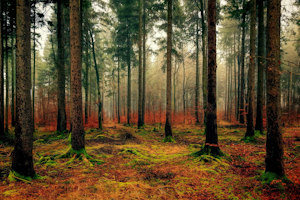
Photo credit: Pixabay