






2026-06-19
- Over the two years of the civil service reform, the average salary increased in nearly all municipal administrations - by about 11 percent annually - so this growth was more consistent than in national-level institutions, where it reached 15 percent in 2024 and 8 percent in 2025.
- The gap between the highest and lowest average salary in municipal administrations did not narrow; on the contrary, it increased by 60 euros from 2023 to 2025.
- The average salary remains highest in the administrations of large cities and resort municipalities, while in some small municipalities it still does not even reach 2,000 euros.
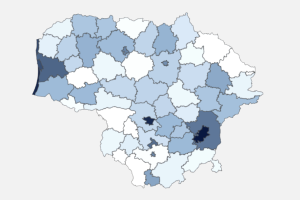 The civil service reform in the area of remuneration, which has been underway since 2024, aims to create a more competitive and flexible remuneration system. The “Overview of Changes in the Number of Employees and Salaries in Public Administration Institutions” conducted by the National Audit Office shows that, over the two years of the reform, salaries in municipal administrations (for both civil servants and employees under employment contracts) have grown more consistently than in national-level institutions. However, this growth did not reduce the salary disparities among the municipalities themselves.
“The civil service reform was intended to give institutions greater freedom in managing their remuneration systems and to enhance competitiveness by attracting and retaining the necessary skills. We see that salaries in municipal administrations have risen steadily, but the disparities between municipalities have not narrowed. Therefore, it is important to assess not only the overall growth in salaries, but also whether the available human resources management tools help address the needs of specific institutions—especially where salaries remain the lowest,” says Auditor General Irena Segalovičienė.
The highest average salaries in 2025 were found in the administrations of major cities and resort municipalities. For example, in the administrations of Vilnius City and Neringa Municipality, the average salary exceeded 3,5 thousand euros before taxes. Meanwhile, in some smaller municipalities - such as the Lazdijai and Šakiai district administrations - the average salary did not even reach 2,000 euros. It is important to note that the gap in average salaries between municipalities actually widened over the course of two years: in 2023 it was approximately 1,714 euros, and in 2025 - 1,774 euros.
Although the overall trend is positive—the number of administrations where the average salary was less than 2,000 euros has decreased from 31 (in 2023) to 8 (in 2025), while the number of those reaching or exceeding the 3,000-euro threshold has increased from 2 to 7 - municipal administrations with lower salaries continue to rank among the least competitive in terms of salaries. The overview shows that in some lower-paying municipal administrations, salaries grew faster than the average, but this was not enough to significantly change their position in the overall context of municipal remuneration.
For example, in 2023, the administrations with lowest average monthly salary - Ignalina (+40 percent), Joniškis (+30 percent), and Visaginas (+28 percent) - saw growth that exceeded the overall average for municipal administrations (22 percent), while growth in the Lazdijai District was slower (+18 percent). Nevertheless, in 2025, the lowest average salary remained in smaller municipalities, such as the Lazdijai District (1,826 euros), the Šakiai District (1,883 euros), and Visaginas (1,943 euros).
Data from the overview conducted by the National Audit Office shows that in municipalities, as in public administration institutions in general, no direct link was found between changes in the number of employees and salary growth. Salaries grew at a similar rate both in administrations where the number of employees decreased and in those where it increased. For example, in the Jonava District, the average salary rose by 37 percent while the number of employees fell by 10 percent; in the city of Klaipėda, the opposite was true—the average salary rose by 36 percent while the number of employees increased by 4 percent.
The data and results of the overview, presented in an interactive tool, allow for the analysis of trends in salaries and changes in the number of employees: Microsoft „Power BI“.