




2026-03-19
National Audit Office: Lithuania’s active ageing policy must change – auditors make recommendations
- State policy does not sufficiently focus on the active participation of an ageing society.
- Participation of people of retirement age in the labour market is not sufficiently encouraged.
- Older people are not systematically involved in cultural activities, and learning opportunities are limited.
- Social services and digital inclusion do not ensure the independence of older people, and loneliness is not recognised as a social problem.
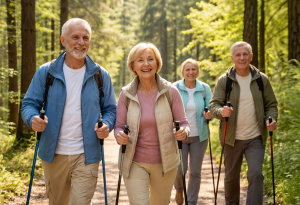 Lithuania’s population is ageing rapidly: at the beginning of this year, nearly one-third (28.8%) of Lithuania’s residents were 60 years of age or older, and by 2100, they may account for nearly half (43.5%) of the country’s total population. However, state policy is still not sufficiently focused on the active participation of older people. The participation of people of retirement age in the labour market is not encouraged enough, older residents are not sufficiently involved in cultural life, digitalisation is becoming more of a source of exclusion than of opportunities, and learning opportunities for them remain limited.
The audit conducted by the National Audit Office, titled “Promotion of Active Ageing”, shows that the country’s active ageing policy is implemented inconsistently and that the activities of the institutions responsible for promoting active ageing are insufficiently coordinated. Ageing is a horizontal issue for the state, requiring the responsible involvement not only of social and health policy makers but also of those in the fields of education and culture.
“Active and inclusive ageing is not only a matter of social well-being but also an economic necessity. We must stop viewing ageing as a temporary crisis or a social burden—it is our new reality, requiring a fundamental shift in perspective. Lithuania needs not just an ageing policy, but an ambitious policy for a long-lived society. This means that older people must have real opportunities, rather than obstacles, to remain in the labour market, to learn, and to create. Our proposals outline a path for how the state can transform itself to harness the potential of active longevity, ensuring dignity, independence, and the sustainability of public finances,” says Auditor General Irena Segalovičienė.
Obstacles to remaining in the labour market: legal barriers and a lack of flexible working conditions
Currently, 14.1% of old-age pension recipients are employed in Lithuania. Their ability to work is limited not only by health and personal reasons, but also by legal barriers. For example, special laws restrict the ability of certain professions (e.g., civil servants, judges, scientists) to continue working after reaching retirement age, which is why 60% of them choose the private sector, where there are fewer restrictions.
Although the number of working people of retirement age in Lithuania is growing every year (from 81,300 in 2022 to 89,800 December 2025), the state has not yet planned any special measures to help them remain in the labour market longer or prepare for retirement. The Labour Code allows for more flexible forms of employment, but these are applied under general conditions, i.e., the employer may, but is not required to, grant their requests; furthermore, no additional guarantees are provided for older workers.
The National Audit Office—as a fiscal institution—projects that total government spending related to ageing could rise to 21.5% of GDP by 2050. Expenditures on old-age pensions will increase the most—by 2.5 percentage points of GDP. Auditors emphasize that a consistent policy is needed to encourage people of retirement age who are willing and able to work to remain in the labour market longer. Such a policy should help reduce age discrimination, create conditions for adapting the work environment and workload, promote more flexible forms of work, and assist people in planning a smooth transition to retirement.
Loneliness must be recognised as a social problem
The audit revealed another pressing issue: loneliness among older people. Loneliness impairs mental health and increases state spending on healthcare, yet in Lithuania it is not recognised as a social problem. According to survey data, 34.5% of older people felt lonely, but 87% of them did not seek help.
Greater involvement in cultural and volunteer activities would help reduce loneliness, but the audit results show that 40% of retired residents have not been active in any activities in recent years, and only 0.1–9.1% of older residents in municipalities participated in third-age university activities in 2024.
According to the auditors, no assessment has been carried out in the country regarding the impact of loneliness on individuals’ health and well-being, nor on state expenditure or the social system. Furthermore, there are no criteria for measuring the level of loneliness among the population, nor is there an institution responsible for identifying lonely individuals. Furthermore, the isolated initiatives currently underway to reduce loneliness lack sufficient consistency. For example, the “Social Prescription” initiative carried out by the Ministry of Culture and the Ministry of Health in 2023–2025, which encourages older people to participate in community activities, but only a part (18 out of 60) of the municipalities are participating in it, and its impact on reducing loneliness has not yet been assessed.
It is important to note that NGOs, such as the Lithuanian Pensioners’ Union “Bočiai,” Caritas Lithuania, the Order of Malta’s Relief Service, and the Lithuanian Red Cross, play a significant role in identifying people living alone. However, the auditors note that their approach is flexible and based on an assessment of individual circumstances.
It is important to promote participation in cultural life, in education and learning activities, and to ensure access to services
The audit showed that older people are not systematically and intentionally involved in cultural activities. In implementing the aforementioned “Social Prescription” initiative, ministries face cooperation challenges regarding funding, the division of responsibilities, and the coordination of activities; the target group (lonely, inactive individuals aged 65 and older) is difficult to reach; family doctors do not participate in the process and do not refer individuals who need this assistance. Only 2 out of 60 municipalities have planned targeted measures to promote older people's participation in cultural activities, while the remaining 58 municipalities carried out activities for all residents without assessing the needs of older people. The main reasons are a lack of financial resources and staff, and uncertainty about what activities older people would like to participate in.
According to the auditors, educational and learning opportunities for older people are also limited. Adult education is mostly geared toward working-age individuals up to 65 years old, and the state’s EUR 500 training basket for older people in the “Kursuok” individual learning account system is inaccessible to them; the range of programs offered is not tailored to the needs of these individuals.
The audit results show that the social services system currently does not provide adequate conditions for older people to remain independent for as long as possible. It is more focused on supporting vital functions when a person can no longer care for themselves, rather than on supporting independent living. Additionally, many public services are currently being rapidly moved to the digital space, but some older people do not have sufficient digital skills and face limited opportunities to access necessary services, which increases the digital divide. Therefore, according to the auditors, it is important not only to teach people how to use digital services but also to ensure alternatives—the ability to handle matters in person, by phone, or with the help of specialists.
What does the National Audit Office recommend
The National Audit Office recommended that ministries take concrete measures to help older people remain independent longer and actively participate in society.
It is recommended that the Ministry of Social Affairs and Labour define a national policy on active ageing, identifying the areas of well-being, objectives, tasks, measures, impact indicators, and a sustainable budget for older people. It should also initiate proposals to remove age limits for employment in the Civil Service and other special laws, create more flexible working conditions for people of retirement age, and develop measures to help prepare for retirement. In addition, establish a minimum mandatory list of basic public health care services for older people for municipalities, so that they can live in their own homes for as long as possible and remain independent.
The ministry will also be required to initiate legislative changes requiring public service providers to ensure at least one alternative method of accessing services—either by phone or in person. In municipalities where the population is ageing more rapidly, there must be a sufficient number of physical service locations or mobile consultant services must be provided.
To address the issue of loneliness, it is recommended to establish criteria for assessing loneliness and to plan measures to reduce it, as well as to more actively encourage people to participate in volunteer activities.
The Ministry of Culture and the Ministry of Health have been recommended to reorganise the "Social Prescription" initiative and expand its implementation nationwide. This would provide older people with more opportunities to participate in cultural, community, and health-promoting activities and help reduce loneliness.
The Ministry of Education, Science, and Sport has been recommended to remove the age limit of 65 for those wishing to receive state funding for training through the “Kursuok” platform. Furthermore, in order to provide better learning opportunities, funding for the participation of people aged 65 and older in programs run by third-age universities and other providers of non-formal adult education should be shifted from a project-based model to one that provides an individual learning basket (the “money follows the person” model).
While some ministries are taking action, others are using the budget as an excuse
Not all ministries are willing to address the identified issues and are prepared to take additional action. The Ministry of Culture has indicated that, due to reduced funding and existing commitments, it will not introduce new measures to help older people participate more actively in cultural life. The Ministry of Education, Science, and Sport notes that there is a lack of funding to implement some of the recommendations. Furthermore, in the auditors’ assessment, some of the measures proposed by the ministry will not ensure measurable changes that would increase public awareness of education and training opportunities.
This audit will contribute to an international audit on the topic of an ageing society, conducted with participation of the supreme audit institutions of Israel, Poland, Slovakia, Portugal, and other countries.