




2026-01-19
- Integration of foreign children in Lithuania is uneven. Children‘s opportunities to learn Lithuanian, which is essential for successful integration, depend on the municipality in which they live.
- There is no national model for the integration of foreign children, so decisions are left to municipalities and schools, which leads to very different practices and results.
- The proportion of foreign children learning Lithuanian as a language of instruction is decreasing. From almost 56% in the 2022–2023 academic year to 44% in the 2024–2025 academic year.
- Municipalities are not utilizing the most effective integration measures. Only 8.7% of newly arrived children intensively studied the Lithuanian language in compensatory classes during their first year.
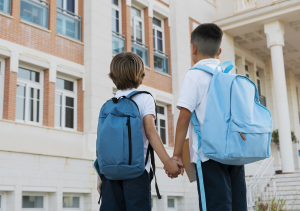 In the 2024–2025 academic year, 14,600 foreign children were enrolled in Lithuanian general education schools. An audit conducted by the National Audit Office, "Integration of Foreign Children into the General Education System," showed that opportunities for these children to learn the national language and receive the necessary educational support are not equal. The country has not developed a national model to ensure the smooth integration of foreign children into the education system. Most integration decisions are left to municipalities and schools, which have different resources and experience. Children's chances of successful integration often depend on where they live.
The audit revealed that since 2022, the proportion of foreign children studying in Lithuanian has decreased from almost 56% to 44%. At the same time, the number of children learning Ukrainian (from 14% to almost 21%) and Russian (from 25% to almost 29%) has increased. The situation is particularly problematic in some municipalities: in Klaipėda and Visaginas municipalities, only about 13% of foreign children are educated in Lithuanian, and in Vilnius city and district, less than 30%. Not knowing the official language increases segregation, slows down the integration of children into the Lithuanian environment, and limits their opportunities to continue their education and successfully establish themselves in the labour market.
“The flexible system currently in place, which allows municipalities to decide on integration measures themselves, is creating a negative trend. The proportion of foreign children learning in Lithuanian is declining, which limits these children's future study and employment opportunities. The differences between municipalities are growing. It is therefore necessary to standardize the minimum standard of Lithuanian language teaching, establish an integration model, and clearly define the responsibilities of municipalities. A unified and strengthened role for municipalities is a necessary condition for the education system to become a driver of integration rather than a source of social exclusion," notes Auditor General Irena Segalovičienė.
The audit found that most municipalities do not have a plan for the successful integration of foreign children. Nine out of ten municipalities selected have not set goals and objectives related to the general education of foreign children. Municipalities apply the most effective integration measures unevenly. Only 8.7% of foreign children who arrived in Lithuania spent their first year intensively learning Lithuanian in compensatory classes (according to data from 1 September 2024), even though international practice considers this model to be one of the most important conditions for successful integration.
Most municipalities do not take advantage of this opportunity – even in the first year of arrival in Lithuania, the integration of foreign children is carried out using the so-called immersion method, where foreign children are immediately included in general classes and study together with their Lithuanian-speaking peers without prior intensive Lithuanian language training. The immersion method can be effective for preschool and primary school children, but for older pupils who do not have sufficient language skills, this method often does not ensure successful participation in the education process and can hinder learning achievements and social integration.
It should be noted that municipalities do not systematically collect data on the educational support needs of foreign children and do not evaluate the results of integration. Therefore, it is unclear whether children actually learn Lithuanian after the adaptation period.
The audit report provides an example of the Panevėžys City Municipality, which has a clear policy on the education of foreign children. Here, all newly arrived children who do not speak Lithuanian spend their first year learning the language intensively in compensatory classes at one school. After the adaptation period and an assessment of their language skills, the children are integrated into regular classes.
The National Audit Office notes that once all municipalities have set specific goals and objectives, measures, and indicators related to the education of foreign children, conditions will be created for successful integration and evaluation of its results, and will help decision-makers make data-driven decisions in the future.