




2025-09-15
 Audit Office, positive changes are taking place in response to the interests of socially vulnerable people. More children from families at social risk have received compulsory pre-school education, and registered unemployed people have been accepted into more jobs. We also see positive steps in the employment of people with disabilities, but faster changes are needed in this area. These results are shown in the report on the implementation of recommendations for the last six months published by the National Audit Office.
"Our recommendations are not just a formality – they promote change in the public sector and contribute to improving people's lives. When the recommendations are implemented, socially vulnerable families and job seekers feel the change. These are the people who need help the most. It is therefore very important that public authorities take greater responsibility and ensure that each recommendation is implemented and translated into real change," says Auditor General Irena Segalovičienė.
In 2020, an audit was conducted on whether changes in education lead to better pupils‘ achievement. The audit found that the gap between children growing up in favourable and unfavourable social, economic, and cultural environments had not narrowed. The National Audit Office made recommendations on how to ensure a more consistent quality of education for each pupil according to their individual needs. Following the implementation of these recommendations, 66 pre-school education institutions were renovated. In addition, 2,325 new and 1,808 renovated preschool and pre-school education places were created. A total of 1,420 sets of equipment were purchased to modernize teachers' workplaces.
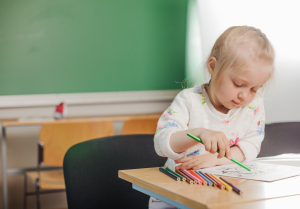
In 2019, there were 122 children growing up in socially disadvantaged families who were assigned to compulsory pre-school education. Of these, only 66 children were educated that year. In 2025, a significant change took place – 793 such children received compulsory pre-school education. This accounts for about half of the children who should receive compulsory pre-school education. This year, the number exceeded the target by almost 300 children. Legislative changes and increased municipal funding contributed to this change.
In 2020, the Seimas adopted amendments to the Law on Education. These amendments aim to ensure high-quality pre-school education for all children at social risk. Funding from the state budget is allocated to ensure and implement this. Between January and August this year, the Ministry of Education, Science, and Sport allocated EUR 3.3 million to municipalities to ensure the education and nutrition of preschool-age children from socially disadvantaged families in educational institutions, and to cover the costs of transporting them to these institutions. By 2027, the state has allocated more than EUR 78 million from EU funds to strengthen the development, accessibility, and quality of preschool education.
The 2021 audit Employment Service activities to increase employment revealed that in the first half of that year, 6.9% of the candidates proposed by the service were hired for vacant positions. This satisfied 9.2% of the demand for workers. With the implementation of the planned measures, the share of vacancies filled by registered unemployed persons increased to 15.3% in 2024.
The results of the 2020 audit Social integration of persons with disabilities showed that in 2019, 8% of the population of Lithuania had a disability. The majority of them were of working age, but only 29% were employed. We are seeing positive changes as the planned measures are implemented, but the targets have not yet been achieved. The proportion of working-age people with disabilities in employment has increased slightly compared to the total number of people with disabilities, to 31% (in 2024). The target is for this figure to reach at least 39% by 2025. The goal is to have at least 39% of these people employed by 2025. The deadlines for submitting recommendations are the end of this year and 2026.
Freepic image